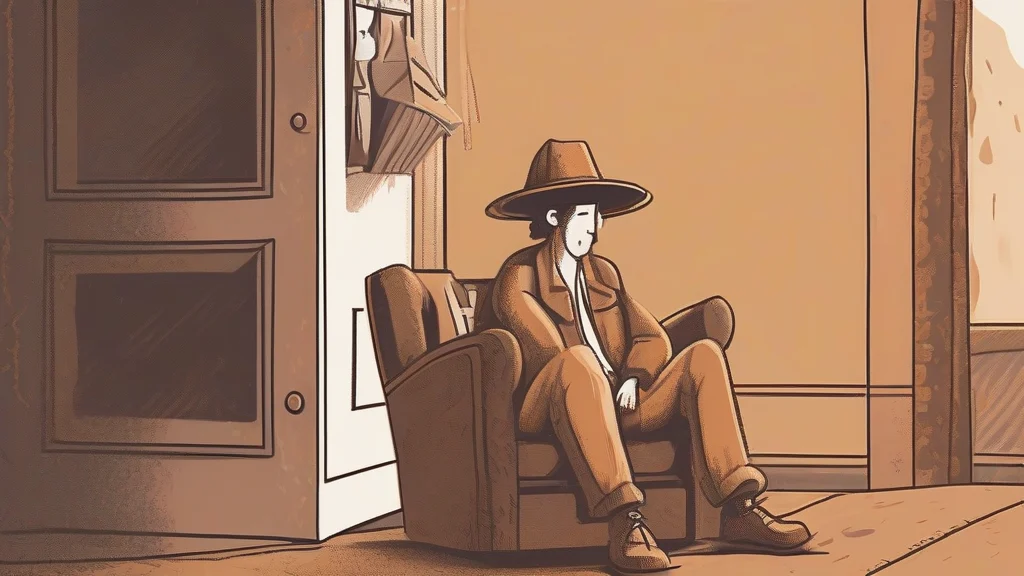
What does doffed mean?
Doffed is the past tense of the verb 'doff', meaning to remove an article of clothing — most characteristically a hat — especially as a polite or respectful gesture. The word has a charming origin: it is a contraction of the Middle English phrase 'do off', its mirror being 'don', from 'do on'. Though once ordinary speech, doff now carries a distinctly formal, literary, or quaint flavor, appearing most often in historical fiction and in the idiomatic expression 'to doff one's hat to someone', which figuratively signals admiration or acknowledgment of another's achievement. A sentence such as 'The gentleman doffed his hat as the procession passed' evokes a bygone era of courtly manners. For writers, doffed is useful precisely because of this evocative, period quality: it instantly suggests formality, deference, or old-world etiquette that plainer words like 'removed' cannot convey.
verbDoffed is the past tense and past participle of 'doff', meaning to remove an item of clothing, especially a hat, often as a gesture of respect or greeting.
- Removed (an item of clothing), especially a hat, typically as a sign of respect or courtesy.
"The gentleman doffed his hat as the funeral procession passed."
"The old coach doffed his cap to the cheering crowd."
"Each knight doffed his helmet upon entering the hall."
'Doff' is actually a contraction of 'do off' — just as 'don' means 'do on' — making these two words tiny fossilized sentences from Middle English.
Reviewed by Deb Chak, Editor. AI-assisted content curated by RJS Tech Solutions LLP.
Etymology of doffed
Doffed derives from the Middle English verb 'doffen', a contraction of 'do off' — parallel to 'don', contracted from 'do on'. Both formations arose in Middle English during the medieval period as convenient contractions for dressing and undressing. While 'don' remains in common use, 'doff' has narrowed to refer almost exclusively to removing hats or other garments as a courteous gesture, giving it a formal, archaic coloring today.
How doffed is actually used
Doff is somewhat formal or literary in modern usage; it survives chiefly in the fixed phrase 'to doff one's hat', which can be literal or figurative (expressing admiration or respect).