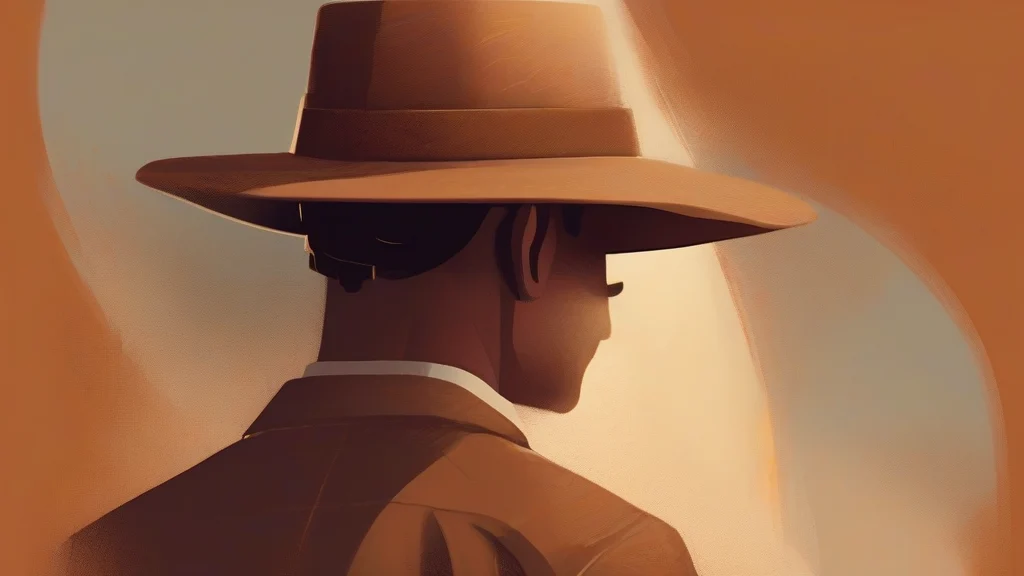
What does doff mean?
To doff something is to take it off, most typically an article of clothing such as a hat. The verb carries strong connotations of courtesy, ceremony, or formality: historically, men would doff their caps as a sign of respect when greeting a social superior, entering a church, or passing a funeral procession. Because hat-tipping has largely fallen out of everyday practice, "doff" now tends to appear in literary, historical, or humorous contexts rather than ordinary conversation. It also extends figuratively to putting aside something intangible — one might doff a disguise, an old identity, or an air of authority. The word is best known through the set phrase "to doff one's hat," which survives both literally and idiomatically, as in "we must doff our hats to her remarkable achievement." Its counterpart, "don," meaning to put on, was formed by the same contraction process and remains more common today. Writers reach for "doff" when they want a touch of elegance, period flavor, or playful formality.
verbTo remove or take off an item of clothing, especially a hat. By extension, to put aside or abandon something such as a habit, role, or attitude.
- To remove an item of clothing, especially a hat, often as a gesture of respect or greeting.
- To put aside or relinquish something abstract, such as a habit, mannerism, role, or attitude.
"The gentlemen doffed their hats as the funeral procession passed."
"He doffed his cap politely as the bride entered the church."
"Once she left the office, she doffed her managerial persona and relaxed completely."
"Doff" is actually a contraction: in Middle English, people said "do off" so often that it fused into one word — its opposite, "don" (as in donning a hat), was formed the very same way.
Reviewed by Deb Chak, Editor. AI-assisted content curated by RJS Tech Solutions LLP.
Etymology of doff
"Doff" originated in Middle English as a contraction of the phrase "do off," meaning to remove. The same process produced its antonym "don," from "do on," meaning to put on. Both contractions were well established by the late Middle English period, with "doff" continuing into Early Modern English, where it appears in Shakespeare. It belongs to a small family of similar fusions using the auxiliary verb "do," reflecting a productive pattern in older English.
How doff is actually used
"Doff" is somewhat formal and literary in modern usage, and is most frequently encountered in the fixed expression "doff one's hat." It carries a slightly old-fashioned, courteous, or ceremonial connotation, evoking earlier eras when hat-tipping was a common social gesture. The figurative sense of shedding a role or habit appears mostly in elevated prose.
Easily confused with doff
"Don" means to put on clothing, the direct opposite of "doff," which means to take it off.
"Dough" is a mixture of flour and liquid for baking, or slang for money; "doff" is a verb meaning to remove clothing or a hat.