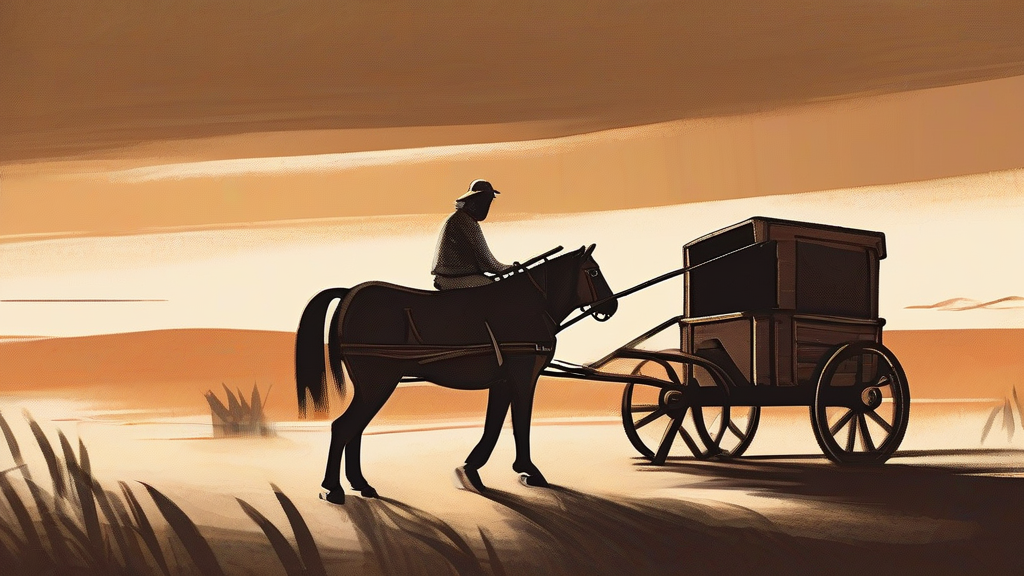
What does dogcart mean?
A dogcart is a light, typically two-wheeled horse-drawn vehicle that takes its name from the enclosed box it originally carried between the axles or behind the seat, designed to transport sporting dogs such as pointers and retrievers on shooting expeditions. Popular in Britain during the nineteenth century, the dogcart was valued as a sturdy yet nimble conveyance for country roads, and it came to be used more generally as a practical family or personal trap, often drawn by a single pony or horse. The word survives chiefly in historical, literary, and rural British contexts, evoking an era when horse-drawn transport was a fixture of country life. For readers of Victorian and Edwardian fiction, where characters routinely arrive at estates by dogcart, knowing the term adds texture and precision to the scene being described.
nounA light, usually two-wheeled horse-drawn cart, originally fitted with a lidded box between or behind the wheels for carrying sporting dogs.
- A light two-wheeled horse-drawn carriage with a compartment or box for carrying sporting dogs.
- By extension, any similar light horse-drawn trap used for personal transport.
"The squire drove his dogcart down the lane each morning with two spaniels riding in the rear box."
"She hired a pony and dogcart to explore the countryside on her visit to the estate."
"In Victorian novels, characters often arrive at country houses by dogcart, their luggage strapped behind them."
Regular plural formation.
"Several dogcarts were lined up outside the stable yard on market day."
Despite the name, the 'dogs' in a dogcart were passengers, not power — the horses pulled while the hounds rode along in style.
Reviewed by Deb Chak, Editor. AI-assisted content curated by RJS Tech Solutions LLP.
Etymology of dogcart
Dogcart is a transparent English compound formed from 'dog' and 'cart', coined in the late eighteenth century when such vehicles were first built to carry sporting dogs. Both elements are ancient Germanic words native to English, so the compound has no borrowed root or foreign cognates; its relatives are simply other compounds built on the same elements, such as 'doghouse' and 'cartage'.
How dogcart is actually used
Chiefly British and historical in modern usage; the word now appears mostly in period fiction, rural contexts, and discussions of antique carriages.
Easily confused with dogcart
A cart is any general-purpose wheeled vehicle, whereas a dogcart is a specific light carriage originally designed to carry sporting dogs in an enclosed box.