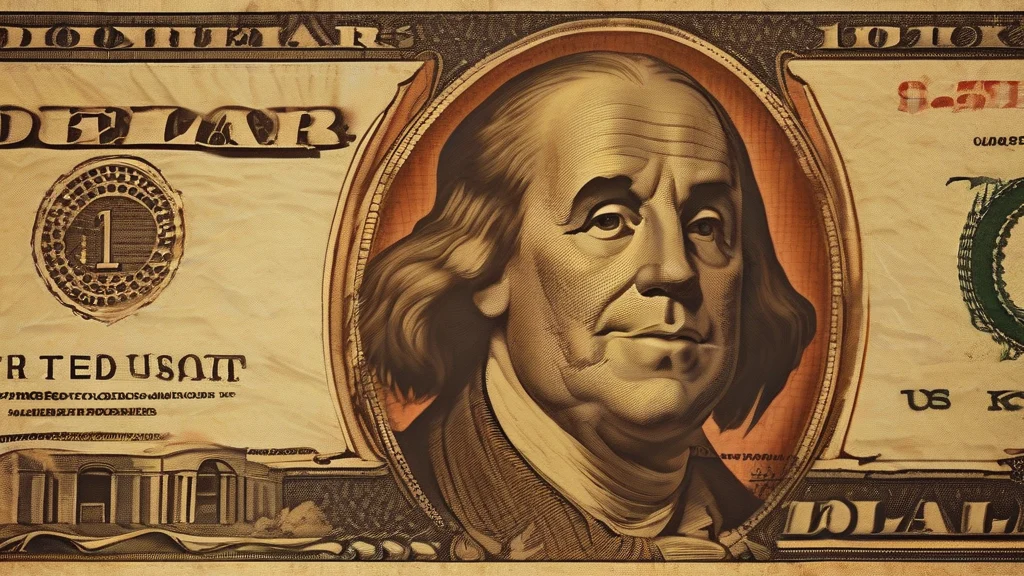
What does dollar mean?
A dollar is the principal monetary unit of several countries, most notably the United States, where it is subdivided into one hundred cents and symbolized by '$'. The term also functions informally as a general reference to money itself, as in expressions like 'every dollar counts' or 'he made a quick dollar.' Beyond its literal financial sense, the word carries cultural weight: the U.S. dollar serves as the world's dominant reserve currency and a de facto standard for international trade. In everyday speech, especially in North America, 'dollar' appears constantly in commerce, pricing, wages, and idioms such as 'bottom dollar' or 'top dollar.' Its versatility — spanning precise currency values and loose figurative uses — makes it one of the most frequently encountered nouns in English. Whether printed on banknotes or spoken in casual conversation, the word anchors countless exchanges about value, cost, and worth across the English-speaking world.
The basic monetary unit of the United States, Canada, Australia, New Zealand, and other countries, equivalent to 100 cents.
"He handed over five dollars for the coffee."
Often abbreviated with the symbol $ placed before the amount.
Money or a sum of money in general, used informally.
"She worked overtime just to earn a few extra dollars."
This sense is chiefly North American and informal.
Regular pluralization; used when referring to amounts greater than one.
"The jacket costs eighty dollars."
The word 'dollar' comes from a 16th-century Czech silver coin minted in a valley — 'Joachimsthaler', literally 'of St. Joachim's Valley'.
Reviewed by Deb Chak, Editor. AI-assisted content curated by RJS Tech Solutions LLP.
Etymology of dollar
The word 'dollar' derives from the Low German 'daler,' short for 'Joachimsthaler,' a silver coin minted in the early 16th century at Joachimsthal ('St. Joachim's Valley') in Bohemia. The '-thal' element means 'valley,' sharing a common Germanic root with the English word 'dale.' The term spread through European trade and was adopted into English by the late 16th or early 17th century to refer to various large silver coins before becoming attached specifically to the American currency after independence.
Related word forms
How dollar is actually used
In American English, 'buck' is a common informal substitute for 'dollar'. Plural usage follows standard English patterns.
Easily confused with dollar
A euro is the currency unit of the European Union, whereas a dollar is the currency unit of countries such as the United States, Canada, and Australia.