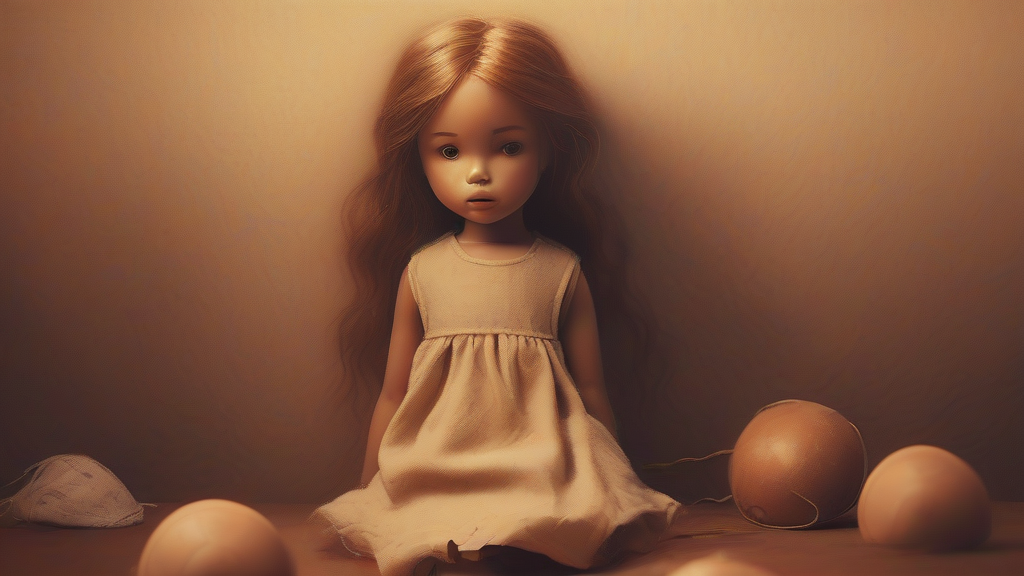
What does doll mean?
A doll is a small model of a human figure, most familiar as a children's toy fashioned from materials such as plastic, cloth, wood, or porcelain. Dolls have been made for thousands of years and appear in nearly every culture, serving not only as playthings but also as collectibles, ritual objects, and artistic works. The word also carries an informal, affectionate sense: calling someone 'a doll' describes them as kind, charming, or attractive, as in 'Thanks for your help — you're a doll.' This figurative use is casual and conversational, and its tone can vary from warm to slightly condescending depending on context. Related compounds such as 'rag doll', 'paper doll', and 'doll's house' are firmly established in everyday English. The word traces back to the early seventeenth century, when it emerged as a pet form of the female name Dorothy, before settling into its modern meaning as a toy figure.
A small model of a human figure, typically a child's toy; informally, a term of endearment for a kind or attractive person.
"The child spent the afternoon dressing her favourite doll in tiny handmade clothes."
To dress attractively or elaborately, usually in the phrase 'doll up'.
"They dolled up in their finest clothes for the gala."
Standard regular plural. The possessive singular is 'doll's' and the possessive plural is 'dolls''.
"The shop window displayed dozens of antique dolls."
The word 'doll' began as a pet form of the name Dorothy — so every doll ever named was, in a sense, called 'Dot'.
Reviewed by Deb Chak, Editor. AI-assisted content curated by RJS Tech Solutions LLP.
Etymology of doll
The word 'doll' originated in England in the early seventeenth century as an affectionate diminutive of the female name Dorothy. It was first used for a mistress or sweetheart, and by extension came to denote a small model figure of a person — presumably because such toys were often given girls' names. The sense of a child's toy became dominant over time, though the affectionate use for a person survives informally today.
Related word forms
How doll is actually used
As a term of address, 'doll' is informal and can sound dated or patronising depending on tone and region; it is more common in American English and in working-class British speech. The plural of the noun is simply 'dolls', but when indicating possession by a doll, the apostrophe form 'doll's' is standard.
Easily confused with doll
'Doll' is a toy figure or a term of endearment, while 'dole' means a distribution of charitable aid, or (in British English) unemployment benefit.