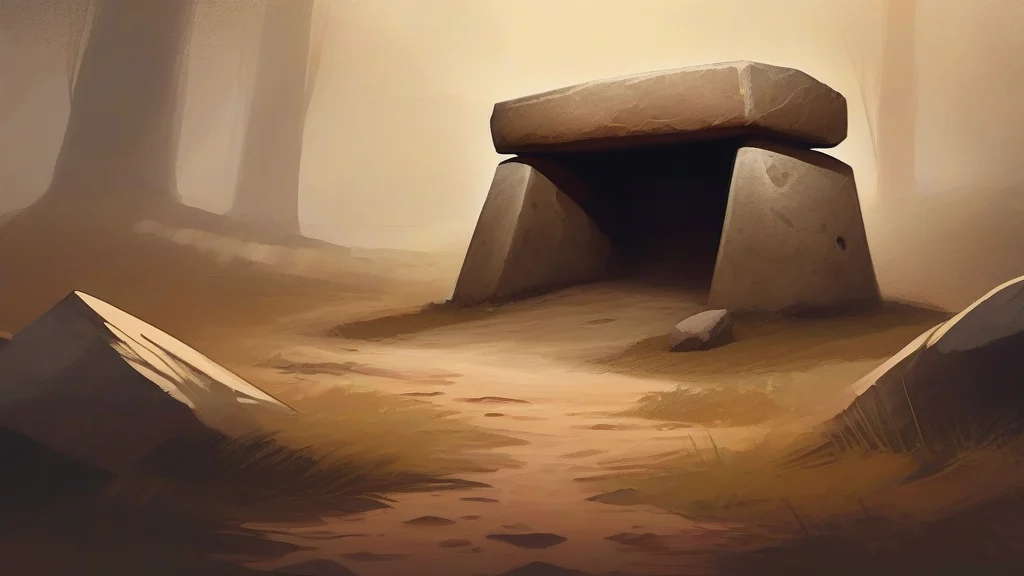
What does dolmen mean?
A dolmen is a type of prehistoric megalithic monument, typically constructed during the Neolithic period, in which a massive flat capstone rests upon several upright stones to form a chamber. Dolmens are most commonly interpreted as tombs, and they occur across Western Europe — notably in France, Ireland, Wales, and England — as well as in other parts of the world such as Korea and India. The word entered English from French in the nineteenth century and is used chiefly in archaeological writing, heritage tourism, and historical discussion rather than everyday speech. Encountering the term usually signals a context concerned with ancient monuments: guidebooks may direct visitors to a local dolmen, while scholars debate its construction methods and funerary purpose. Though simple in design, a dolmen represents considerable communal effort and remains one of the most visually striking survivals of prehistoric architecture.
nounA megalithic tomb structure of the Neolithic period, consisting of two or more upright stones supporting a large flat capstone. Dolmens are found across Western Europe and other parts of the world, typically serving as burial chambers.
- A prehistoric megalithic tomb consisting of a large flat stone resting on upright stones.
"The ancient dolmen on the hillside has stood for over four thousand years."
"Archaeologists carefully documented the dolmen before the site was excavated."
"Tourists travel from around the world to see the well-preserved dolmens of Brittany."
Regular plural form; used when referring to multiple such monuments, often in regional or comparative archaeological contexts.
"Brittany contains thousands of dolmens dating back to the Neolithic period."
Reviewed by Deb Chak, Editor. AI-assisted content curated by RJS Tech Solutions LLP.
Etymology of dolmen
The word 'dolmen' comes from French, where it appeared in archaeological usage in the early nineteenth century. Its ultimate origin is uncertain; it is often linked to Breton 'tol' (table) and 'men' (stone), literally meaning 'stone table', though this etymology is debated by some scholars. The term spread into English and other languages through French archaeological literature describing the megalithic tombs of western Europe.
How dolmen is actually used
The term is primarily used in archaeology and discussions of prehistoric monuments. It is a formal or technical word rather than part of everyday vocabulary.
Easily confused with dolmen
Cromlech is a related term sometimes used interchangeably with dolmen in Britain, though it can also refer to a stone circle; dolmen specifically denotes the capstone-and-uprights tomb structure.