
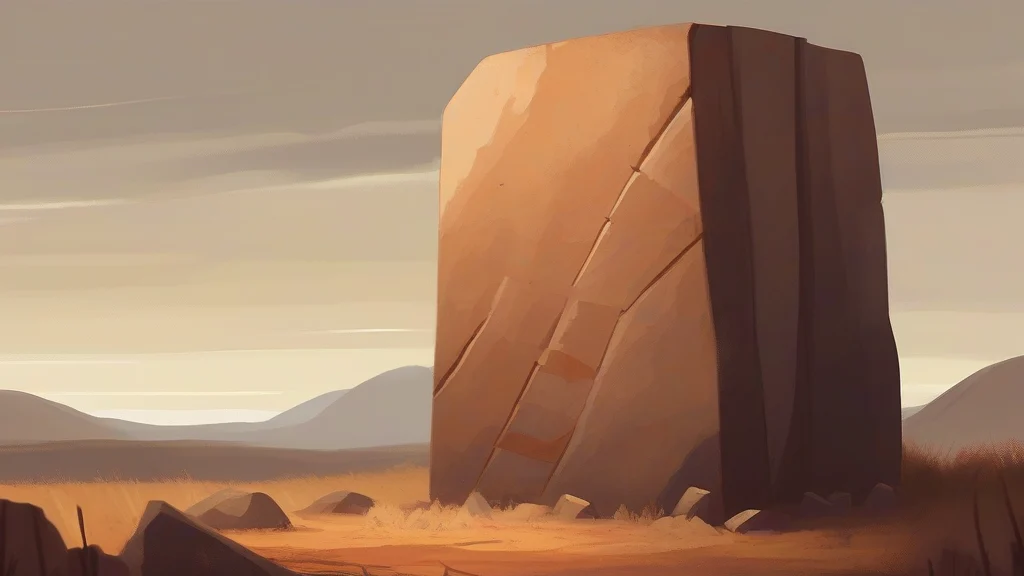
What does megalith mean?
A megalith is a large stone, especially one raised, placed, or incorporated into a monument during prehistoric times. Such stones often formed part of cairns, alignments, passage graves, dolmens, and other structures associated with ancient communities in Europe and elsewhere. The singular commonly refers to one substantial stone, while megalithic describes a monument, structure, or tradition involving large stones. In everyday speech, the word carries a sense of antiquity, permanence, and mystery because many megaliths were deliberately positioned in prominent landscapes. It should not be used simply for any large rock: the term carries a clear archaeological association with prehistoric stone construction. Although menhirs and dolmens are types of megalithic arrangements, not every megalith belongs to either category, and the broader word can apply to solitary stones as well as complex monuments.
nounA megalith is a very large stone, especially one erected or arranged as part of a prehistoric monument. The term is also used more broadly for such stones and structures.
- A large stone, especially one erected in prehistoric times or used in the construction of a monument.
- A prehistoric monument made from or incorporating one or more large stones.
"The valley is renowned for the megaliths that line its ancient ceremonial route."
"Researchers used ground-penetrating radar to locate a megalith beneath the field."
"The exhibition explores how prehistoric communities moved and raised megaliths."
Use the plural when referring to several large stones or multiple megalithic monuments.
"The surrounding hills contain numerous megaliths."
Megalith means “great stone”: a name that captures the awe inspired by ancient monuments raised from massive blocks of stone.
Reviewed by Deb Chak, Editor. AI-assisted content curated by RJS Tech Solutions LLP.
Etymology of megalith
Megalith was formed in English during the 19th century from the Greek megas, meaning “great” or “large,” and lithos, meaning “stone.” It reached English through French, in which the word was mégalithe. Its components also underlie English words such as macro- and lithic, while the same ancient Greek root for stone appears in lithosphere and lithology.
Related word forms
How megalith is actually used
In British and American English, megalith is chiefly an archaeological and historical term. It denotes the large stone itself and may also refer to the monument or structure formed by such stones; megalithic is the corresponding adjective.
Easily confused with megalith
A monolith is a single large standing stone, while a megalith may be one large stone or part of an arrangement of large stones forming a monument.
A menhir is a single upright megalith, whereas the term megalith can include horizontal stones, stones incorporated into structures, and groups of stones.