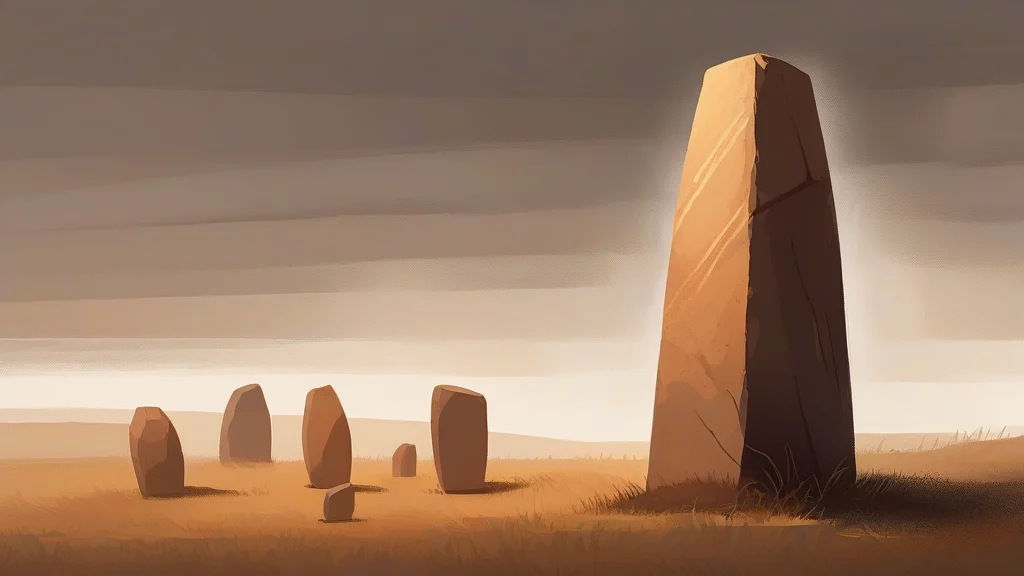
What does menhir mean?
A menhir is a type of prehistoric monument consisting of a large, upright stone, often found in ancient landscapes. These structures can be several feet tall and are typically made of local rock. Menhirs are associated with burial grounds, ritual sites, and spiritual practices of ancient civilizations. The term is commonly used in archaeology and history to describe these enigmatic structures. Menhirs can be found in various parts of the world, including Europe, Asia, and Africa. Their purpose and meaning continue to be a subject of study and debate among scholars.
nounA menhir is a large, upright stone monument, typically found in prehistoric landscapes, often associated with ancient burial grounds or ritual sites. These stones can be several feet tall and are usually made of local rock.
- A prehistoric standing stone
- A type of megalithic structure
"The ancient menhir stood tall in the center of the mystical forest, shrouded in mystery and local legend."
"The menhir was believed to have spiritual significance by the ancient civilization that built it."
"The tourists marveled at the massive menhir, wondering how it was transported to its current location."
The plural form 'menhirs' is used to refer to multiple standing stones.
"The archaeological site featured several menhirs, each with its own unique characteristics."
Reviewed by Deb Chak, Editor. AI-assisted content curated by RJS Tech Solutions LLP.
Etymology of menhir
The word 'menhir' originates from the Breton language, in which 'men' means 'stone' and 'hir' means 'long'. It has been adopted into various languages, including English, to describe these prehistoric standing stones. The term has been used in archaeological contexts since the 18th century.
How menhir is actually used
The term 'menhir' is often used interchangeably with 'monolith', but technically refers specifically to a single, upright stone. It is commonly used in archaeological and historical contexts.