
What does monolith mean?
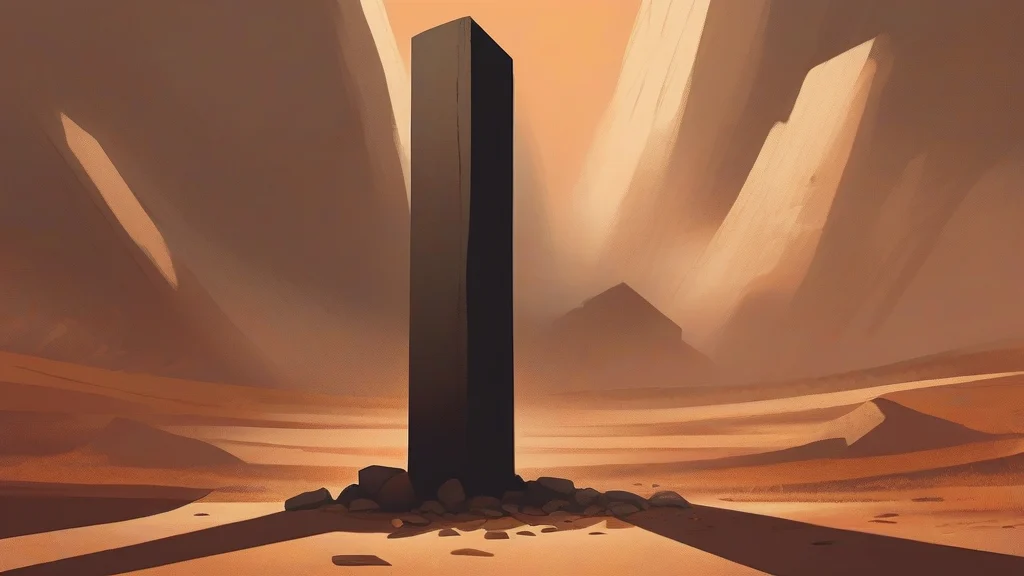
A monolith is, in its literal sense, a large stone standing on its own, often carved with markings or erected as a monument. Its figurative use is equally forceful: it describes a powerful person, institution, corporation, or system so large and closely unified that it seems indivisible. In this sense, “monolithic” can suggest strength, cohesion, and stability, but it is especially common in criticism of centralized, rigid, or unaccountable organizations. The figurative extension grew from the word’s original image of a single massive block, making “monolith” useful whenever an entity appears to overwhelm smaller components. It can also refer to a character or presence that is formidable and difficult to challenge. The word is used in both British and American English and combines an archaeological sense with a modern political, institutional, and cultural vocabulary.
nounA large, single upright stone, especially one carved with inscriptions or used as a monument. By extension, a monolith is a large, unified organization or system whose parts are closely integrated and difficult to change separately.
- A large, single upright stone, especially one carved as a monument.
- A large, unified organization, institution, or system regarded as indivisible.
- A person or thing portrayed as powerful, imposing, and resistant to change.
"The museum is dominated by a towering stone monolith, while the country's monolithic bureaucracy has proved difficult to reform."
"The ancient monolith stands beside the ruins of the settlement."
"Critics argued that the sprawling corporation had become a financial monolith."
The standard plural form for the noun.
"Several ancient monoliths have been found near the site."
The word literally means “one stone”: a monolith derives from Greek roots meaning “single” and “stone,” and its figurative use describes systems that function as one enormous, unyielding whole.
Reviewed by Deb Chak, Editor. AI-assisted content curated by RJS Tech Solutions LLP.
Where does monolith come from?
The word derives from Greek monolithos, meaning “a single stone,” formed from monos, “alone” or “single,” and lithos, “stone.” It entered English in the early 17th century through classical and continental European forms. The later figurative meanings developed by analogy with the physical idea of one undivided mass. The related adjective “monolithic” also retains the original emphasis on solidity and unity.
Related word forms
How monolith is actually used
The literal sense is neutral and commonly archaeological. The figurative senses often carry a negative connotation of excessive size, rigidity, centralization, or resistance to change, although they can also emphasize strength and unity.