
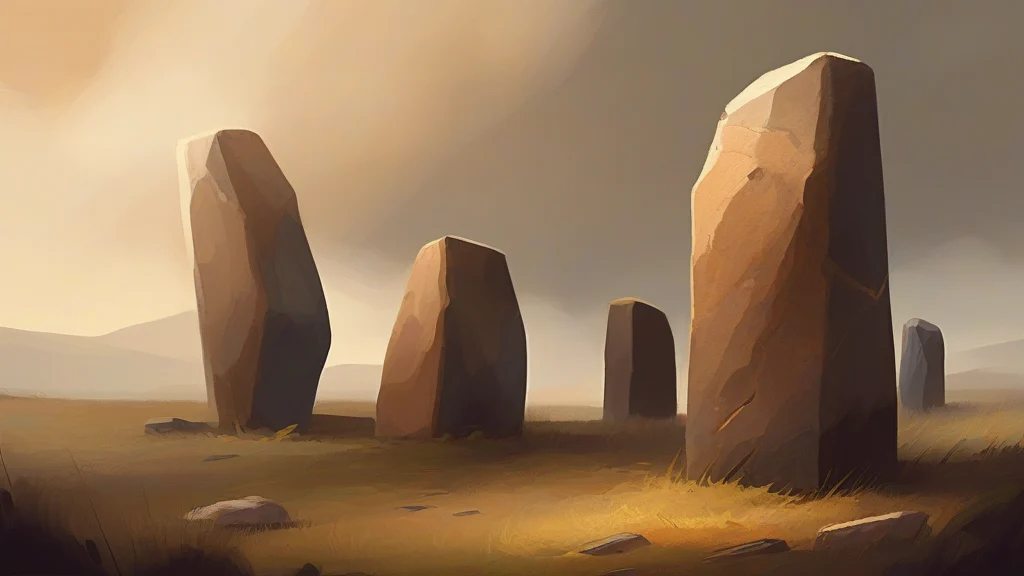
What does megalithic mean?
Megalithic is an adjective chiefly used for large stones, monuments, tombs, and archaeological sites connected with prehistoric communities. In its principal sense, it describes structures built or assembled from substantial stones, many of which date from the Neolithic or Bronze Age. The adjective can also be used figuratively to characterize something unusually large, imposing, or enduring, often with an emphasis on mass and monumentality. For example, a megalithic tomb is an archaeological feature, while a building with vast, heavy interiors may be described as having a megalithic appearance. The word combines the Greek elements mega, meaning “great,” and lithos, meaning “stone,” reflecting the long-standing recognition of huge stones as distinctive features of the prehistoric landscape. Its combination of archaeological precision and forceful figurative use makes it more evocative than the general word “large.”
adjectiveRelating to megaliths or to the prehistoric monuments and culture associated with them. By extension, it can describe something so large or imposing that it appears monumental.
- Relating to megaliths, especially the large stones, monuments, tombs, and sites associated with prehistoric communities.
- Figuratively, extremely large, imposing, or monumental.
"The visitors walked among the megalithic stones as the late afternoon sun cast long shadows across the site."
"Archaeologists used radiocarbon dating to investigate the settlement associated with the megalithic site."
"The cathedral's vast interior has a distinctly megalithic sense of scale."
The word for prehistoric giant stones is itself a compact lesson in Greek: mega means “great” and lithos means “stone.”
Reviewed by Deb Chak, Editor. AI-assisted content curated by RJS Tech Solutions LLP.
Etymology of megalithic
Megalithic derives from English megalith, which was formed from the Greek megas, meaning “great,” and lithos, meaning “stone.” The word became established in archaeological usage for large prehistoric stones and the monuments built from them. Its Greek elements are also reflected in related English words such as megalith, lithic, lithology, and lithosphere.
How megalithic is actually used
The word is most common in archaeology and history when discussing prehistoric stone monuments. Its figurative use conveys exceptional size, mass, or monumentality and is usually more emphatic than simply “huge.”
Easily confused with megalithic
A megalith is the large stone or group of stones itself, whereas megalithic is the adjective describing such stones, monuments, or the culture associated with them.