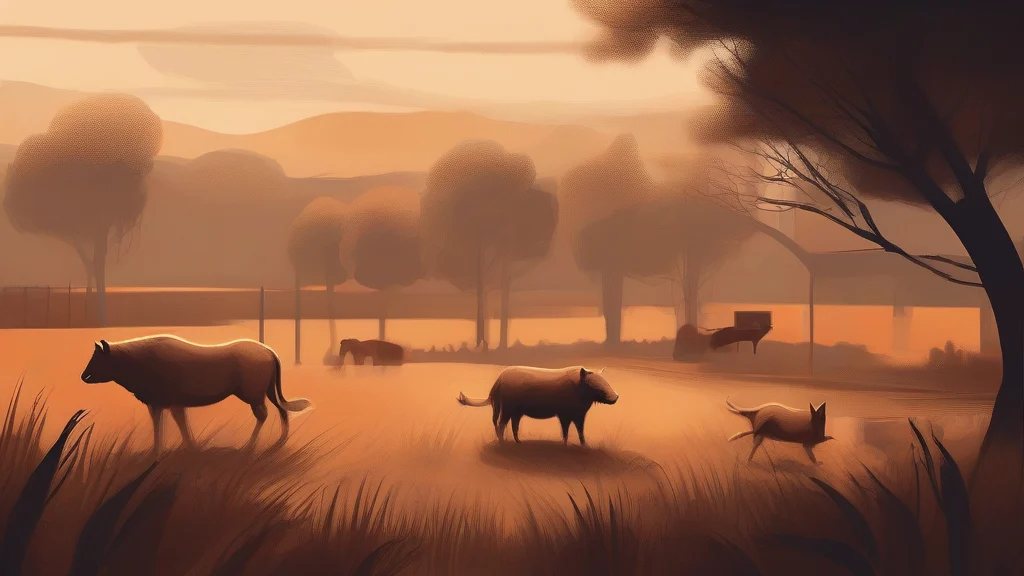
What does domesticating mean?
"Domesticating" is the present participle of the verb "domesticate," meaning to bring wild animals or plants under human care and control so that they become adapted to life alongside people. It is central to discussions of agriculture and history, describing processes that began over ten thousand years ago when humans started taming wolves, goats, wheat, and rice, gradually shaping species through selective breeding. The word also carries a figurative sense: to make something more homely, comfortable, or civilized, as when someone is said to be domesticating a bare apartment with furniture and plants. The tone is neutral in scientific contexts but can be gently humorous or affectionate in everyday use, especially when applied to people settling into domestic routines. Derived from Latin "domesticus" (belonging to the house), it belongs to a family of words including "domestic," "domestication," and "domicile." Understanding "domesticating" connects language to one of humanity's most consequential achievements: reshaping nature itself.
verbPresent participle and gerund of "domesticate": to tame wild animals or plants and bring them under human control and care, or figuratively to make something more homey, familiar, or suited to ordinary domestic life.
- To adapt a wild animal or plant to life in close association with humans, typically through selective breeding over generations.
- To make something more domestic, familiar, or suited to home life (figurative).
"Farmers began domesticating wild goats thousands of years ago."
"Early farmers succeeded in domesticating wheat from wild grasses in the Fertile Crescent."
"She spent the weekend domesticating her new apartment with plants and soft lighting."
Every dog on Earth — from chihuahuas to Great Danes — exists because humans began domesticating wolves over 15,000 years ago.
Reviewed by Deb Chak, Editor. AI-assisted content curated by RJS Tech Solutions LLP.
Etymology of domesticating
"Domesticating" derives from the Latin "domesticare" (to dwell in, or make at home), itself from "domesticus," meaning "of the household," which comes from "domus," the Latin word for house. The verb entered English in the early 17th century via Medieval Latin and French influence. Its root also gives English "domestic," "domicile," and "domesticity," all sharing the sense of belonging to the home.
Related word forms
How domesticating is actually used
The literal sense is standard in scientific, historical, and archaeological writing about agriculture and animal husbandry. The figurative sense is informal and often slightly playful, applied to spaces, habits, or even people.
Easily confused with domesticating
"Domestic" is an adjective meaning relating to the home or one's own country, while "domesticating" is the act of taming something wild or making it more home-like.