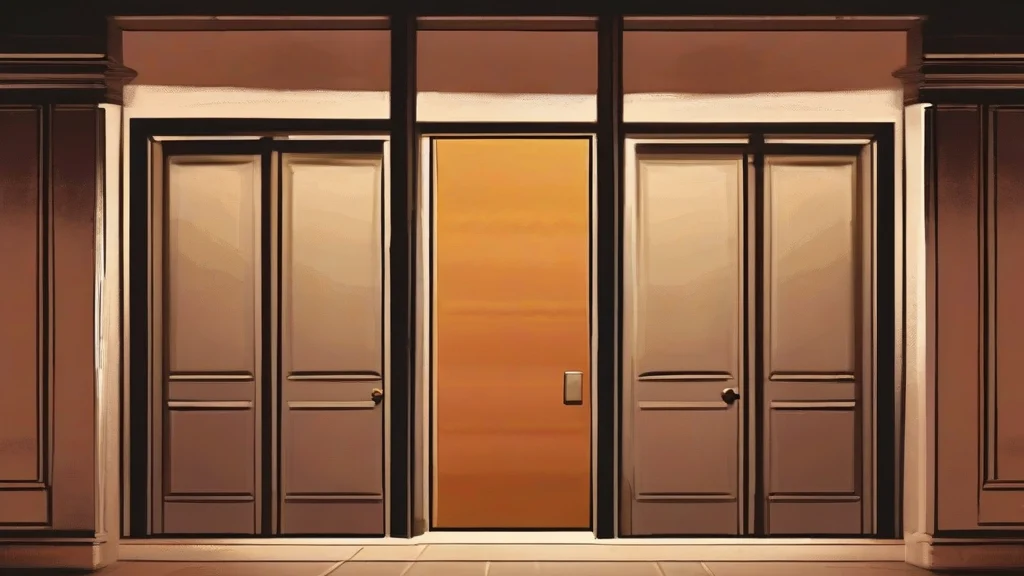
What does doorjamb mean?
A doorjamb is one of the two vertical structural members that form the sides of a doorway. Together with the horizontal lintel above (and often the threshold below), the jambs define and support the opening into which a door is hung, providing both structural support and a surface to which the frame and hinges are attached. The term belongs to the vocabulary of building and carpentry but appears regularly in everyday writing, especially in descriptive passages — characters in fiction are forever leaning in doorways, arms braced against the jamb. It carries no particular connotation of formality or informality; it is simply the precise, standard name for a part of the house most people see daily but rarely name. Related terms include 'jamb' more generally, which can refer to the vertical sides of window or fireplace openings as well. Knowing the word allows a writer or speaker to describe architecture with accuracy rather than vague gestures toward 'the side of the door'.
nounA doorjamb is one of the two vertical members that form the sides of a doorway, supporting the lintel above and framing the opening into which a door is fitted.
- One of the two vertical posts forming the sides of a doorway, supporting the structure above.
"She leaned against the doorjamb, watching the rain streak down the windows."
"He propped his elbow on the doorjamb as he waited for her to finish getting ready."
"The carpenter replaced the rotten doorjamb before fitting the new front door."
The plural is regular. Speakers most often use the plural when referring to both sides of a single doorway or to the frames of multiple doorways.
"Both doorjambs had been scuffed by years of moving furniture through the narrow hall."
Every time you lean casually in a doorway, you're using a word that's over 400 years old — 'doorjamb' comes from the French 'jambe', meaning 'leg', because these uprights literally stand like legs on either side of the opening.
Reviewed by Deb Chak, Editor. AI-assisted content curated by RJS Tech Solutions LLP.
Etymology of doorjamb
The word doorjamb combines 'door' with 'jamb', which entered English in the Middle Ages from Old French 'jambe', meaning 'leg'. The Old French term ultimately derives from Late Latin 'gamba', itself borrowed from Greek 'gampē', referring to an animal's leg or hock. The metaphor is apt: the jambs stand upright like legs flanking the doorway. The compound 'doorjamb' is attested by the early seventeenth century, and cognates of 'jamb' survive in modern French ('jambe', leg) and in English words such as 'gambit' and 'gambol', all tracing back to the same leg-related root.
How doorjamb is actually used
Doorjamb is a neutral, everyday architectural term used in both construction contexts and general descriptive prose. It is slightly more specific than the bare word 'jamb' and is common in American usage; British English often uses simply 'jamb' or 'doorpost'. The compound is typically written as one solid word.
Easily confused with doorjamb
A jamb is any vertical side of an opening (a window or fireplace as well as a door), while doorjamb specifically refers to the vertical sides of a doorway.
The lintel is the horizontal beam across the top of a doorway, whereas the doorjamb is one of the two vertical supports on either side.
The threshold is the strip at the bottom of the doorway that you step over, not the vertical side pieces.