What does gambit mean?
A gambit is a calculated opening move, originally from chess, where a player deliberately sacrifices material—most often a pawn—to secure a strategic advantage such as faster piece development or control of the board's center. Over time the word has broadened beyond the chessboard: today it most often describes any opening remark, offer, or action designed to gain an edge or steer events, whether in diplomacy, business negotiations, or everyday conversation. Because every gambit involves giving something up for prospective gain, the word carries a strong sense of calculation and risk; a successful one looks brilliant in retrospect, while a failed one may look reckless. Familiar phrases include the 'opening gambit' of a discussion and named chess openings like the Queen's Gambit. Borrowed into English in the seventeenth century from Spanish and Italian roots meaning a tripping of the legs, 'gambit' remains a vivid way to describe strategy disguised as generosity.
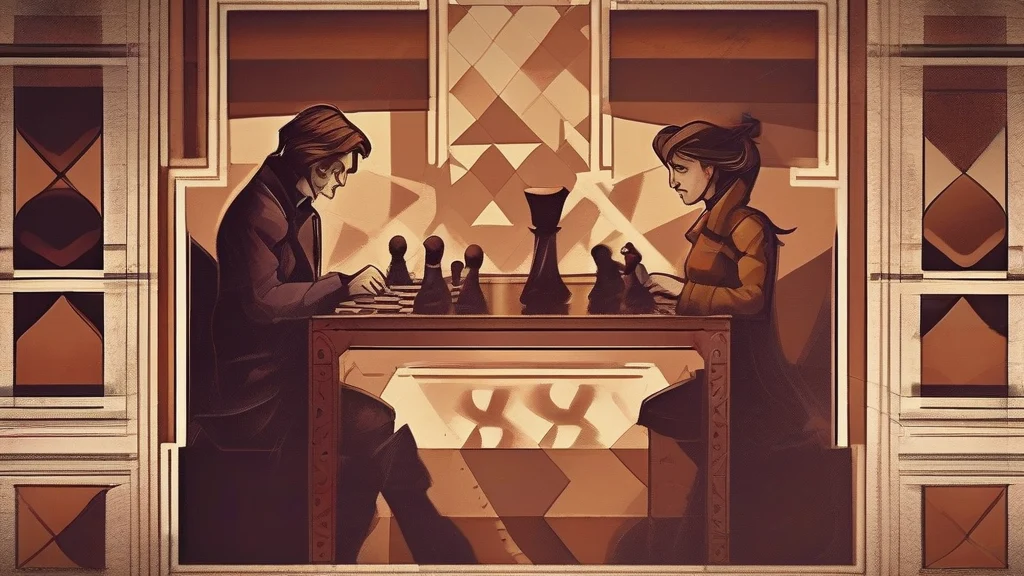
In chess, an opening in which a player offers a sacrifice, usually a pawn, to obtain an advantageous position.
"She surprised her opponent with the King's Gambit in their very first tournament game."
Named gambits include the Queen's Gambit, King's Gambit, and Evans Gambit.
Any opening remark or maneuver intended to gain an advantage or establish a favorable position in a conversation, negotiation, or undertaking.
"His self-deprecating joke was an opening gambit to disarm the skeptical panel."
The plural follows standard English formation with -s.
"The negotiators tried several different gambits before finding common ground."
Every gambit begins as a gift — the chess master offers you a pawn that looks free, but accepting it may cost you the game.
Reviewed by Deb Chak, Editor. AI-assisted content curated by RJS Tech Solutions LLP.
Etymology of gambit
'Gambit' entered English in the early seventeenth century from Spanish 'gambito' or Italian 'gambetto,' literally 'a tripping,' derived from 'gamba,' meaning leg — ultimately from Late Latin 'gamba,' referring to a horse's leg or hock. The term first named chess openings in which a pawn is offered up to trip up the opponent, and its figurative sense of a strategic opening ploy developed from there. The same Latin root gave English 'gambol' (to skip or frolic) and survives in musical instrument names such as the viola da gamba.
How gambit is actually used
The chess sense is the older and narrower meaning; the extended figurative sense is now far more common in everyday usage. In figurative use, 'gambit' often carries a connotation of calculated cleverness and can shade toward suggesting cunning or manipulation. The plural is simply 'gambits.'
Easily confused with gambit
A 'gambit' is a strategic opening move or ploy, while the 'gamut' is an entire range or scale, as in 'running the gamut' of emotions.