What does dorbeetle mean?
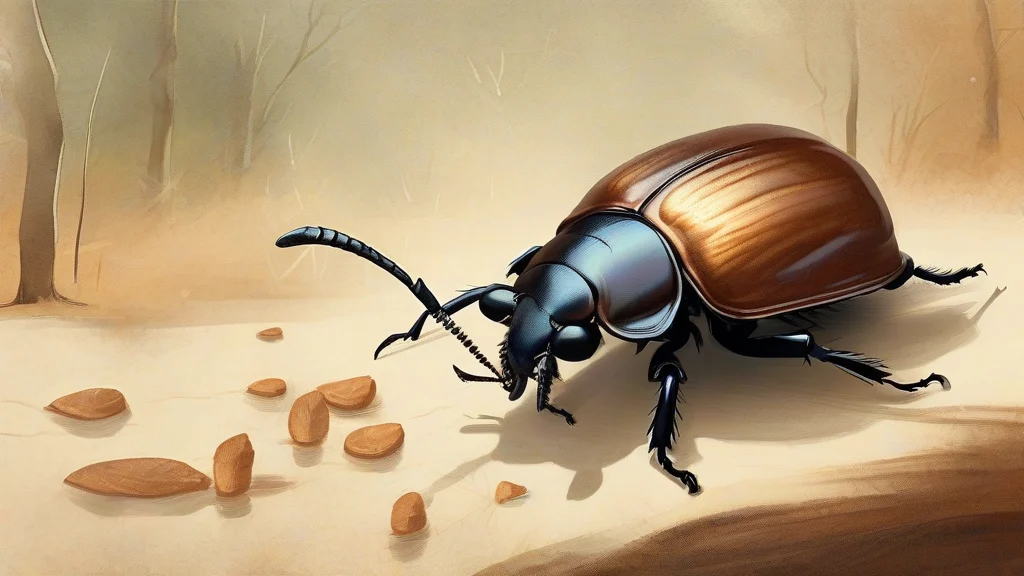
A dorbeetle is a large, heavy-bodied beetle belonging to the scarab family, most familiarly the cockchafer, which appears in late spring across Britain and Europe. The name combines "dor" — an Old English term for a buzzing or humming insect — with "beetle," so it essentially means "the droning beetle," a reference to the loud, clumsy flight for which these insects are known. Dorbeetles spend several years underground as larvae feeding on plant roots before emerging as adults, when their erratic, bumping flights often bring them into houses and gardens after dark. The word is chiefly British and has an old-fashioned, rural, or literary flavor; modern speakers more often say "cockchafer" or "May bug." Though once considered a garden pest, the dorbeetle remains a nostalgic emblem of early summer evenings.
nounA dorbeetle is any of various large dung beetles or chafers, especially the common cockchafer (Melolontha melolontha), noted for its clumsy, buzzing flight.
- Any large dung beetle or chafer, especially the cockchafer.
"A dorbeetle blundered against the window pane with a heavy, droning thud."
"On warm May evenings, dorbeetles crashed clumsily against the lamplit windows of the cottage."
"The children chased a dorbeetle across the lawn, fascinated by its loud, humming flight."
Regular plural; used when referring to multiple individuals of the insect.
"Dorbeetles swarmed around the orchard lights at dusk."
The "dor" in dorbeetle comes from an Old English word for a buzzing insect — so the name literally means "the droning beetle."
Reviewed by Deb Chak, Editor. AI-assisted content curated by RJS Tech Solutions LLP.
Etymology of dorbeetle
The word derives from Middle English and ultimately Old English: "dor" was an Old English term for a bee or other buzzing insect, later applied to beetles that fly noisily, combined here with "beetle" (from Old English bitela, related to bītan, "to bite"). The compound "dorbeetle" arose in English to specify the large chafer beetles known for their droning flight, and it has remained primarily a British term.
How dorbeetle is actually used
Chiefly British and somewhat dated or literary; in modern everyday speech, names such as "cockchafer" or "May bug" are more common.
Easily confused with dorbeetle
"Dor" alone refers to the same kind of beetle in older usage, while "dorbeetle" is the fuller compound form naming the insect explicitly.