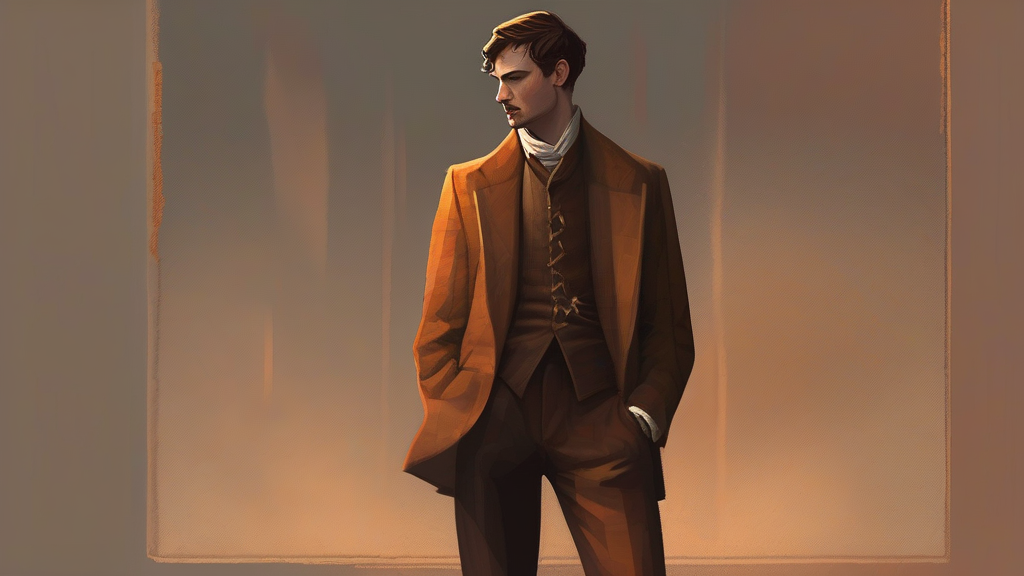
What does doublet mean?
A doublet is primarily known as the close-fitting, often padded jacket worn by men across Western Europe from roughly the fourteenth century to the seventeenth, typically fastened at the front with buttons or laces and worn beneath a cloak alongside hose. Today the garment survives chiefly in costume dramas, portraits, and museum collections, so the word carries a distinctly historical flavour. Beyond clothing, doublet names any matched pair of things — most notably in linguistics, where an 'etymological doublet' refers to two words in one language descended from the same ancestor via different routes, such as 'ward' and 'guard'. The term also appears in the sciences, describing twin energy levels, compound lenses, or duplicated genes. Derived ultimately from Latin 'duplus', meaning twofold, doublet is a precise, useful word wherever things come in twos.
A man's close-fitting padded jacket worn in Western Europe from the late Middle Ages to the 17th century.
"The costume department stitched each actor a doublet for the production of Shakespeare's Twelfth Night."
Almost exclusively encountered in historical, theatrical, or costume-related contexts today.
A pair of similar or identical items, especially two words derived from the same etymological source by different routes.
"'Shirt' and 'skirt' are often cited as a doublet of Germanic origin."
In linguistics usually qualified as 'an etymological doublet'.
In optics or spectroscopy, a closely associated pair — such as a compound lens made of two elements, or two nearby spectral lines or energy states.
"An achromatic doublet corrects chromatic aberration by combining crown and flint glass lenses."
Technical usage restricted to optics, spectroscopy, and related sciences.
Regular plural; used for multiple garments, word pairs, or optical/spectroscopic pairs.
"The museum displayed a collection of sixteenth-century doublets."
Every time you say 'shirt' you owe something to the doublet — the snug, padded jacket that shaped men's fashion for over three hundred years.
Reviewed by Deb Chak, Editor. AI-assisted content curated by RJS Tech Solutions LLP.
Etymology of doublet
Doublet comes from Old French, where it was a diminutive of 'double', itself derived from Latin 'duplus' meaning twofold. It entered English in the Middle Ages, first recorded as the name for the padded male jacket whose construction involved layers — hence the notion of doubling. The extended sense of 'a pair' developed naturally from this idea of doubled material and structure. Its Latin root makes it cognate with words such as 'double', 'duplicate', and 'duple'.
How doublet is actually used
The garment sense is now almost entirely confined to historical writing, costume design, and museum contexts. The linguistic sense ('etymological doublet') is technical vocabulary used mainly in philology and historical linguistics. The scientific senses (optics, spectroscopy, genetics) are specialized terms within their fields.
Easily confused with doublet
'Doubled' is the past tense and past participle of the verb 'to double', while 'doublet' is a noun meaning either a historical jacket or a pair of related items.
A duvet is a soft quilted bedding cover, whereas a doublet is a men's historical garment or a linguistic pairing.