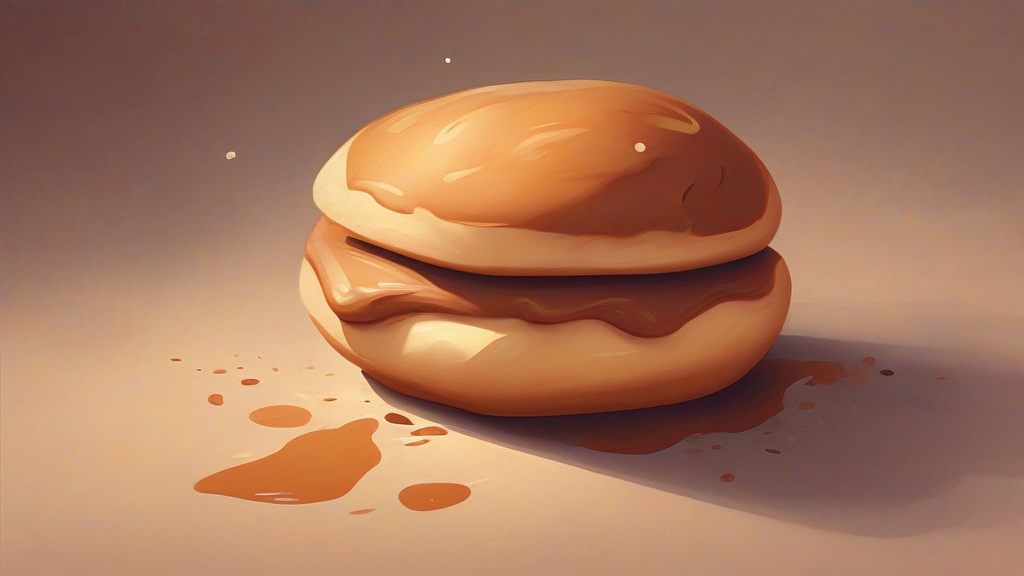
What does doughiest mean?
"Doughiest" is the superlative form of the adjective "doughy," describing whatever most closely resembles raw or undercooked dough in texture — soft, heavy, moist, and yielding rather than crisp or firm. It applies chiefly to baked goods: an underdone loaf may be praised for having a crusty exterior while its interior remains the doughiest part, though when said critically it signals that bread or pastry has not finished baking. The word also carries a figurative sense applied to people or complexions, suggesting pallor, softness, or lack of tone, often with a gently unflattering connotation. Formed by adding the standard English superlative ending "-est" to "doughy," which itself derives from the ancient Germanic root behind the word "dough," it belongs to an ordinary domestic vocabulary. It appears most naturally in cooking contexts, informal conversation, and descriptive writing about food.
adjective (superlative of 'doughy')Most doughy: having the soft, heavy, undercooked or pliable texture of dough. Also used figuratively to describe something pale, flabby, or lacking firmness.
- Having the soft, heavy, pliable texture of raw or undercooked dough (said especially of baked goods).
- Figuratively: pale, soft, or flabby in appearance or character.
"The baker pulled the loaf out early, leaving its centre the doughiest part of the bread."
"The middle of the roll was still the doughiest bite I've ever taken."
"After months indoors he looked the doughiest and palest she had ever seen him."
Superlatives like 'doughiest' are how bakers scold their bread — it's literally as bad as texture gets.
Reviewed by Deb Chak, Editor. AI-assisted content curated by RJS Tech Solutions LLP.
Etymology of doughiest
"Doughiest" derives from "doughy," formed from "dough" plus the adjective suffix "-y." The noun "dough" comes from Old English dāh/dāg, shared with other Germanic languages (compare Dutch deeg and German Teig), and traces back to the Proto-Germanic *daigaz, related to a verb meaning 'to knead.' The superlative "-est" ending is native English morphology, so the whole word is firmly Germanic in origin.
Related word forms
How doughiest is actually used
Informal to neutral register. Most common in food writing and everyday speech about baking; figurative use describing people's appearance can sound mildly unflattering.
Easily confused with doughiest
'Dowdiest' means most drab or unfashionable in appearance, while 'doughiest' refers to a soft, dough-like texture.