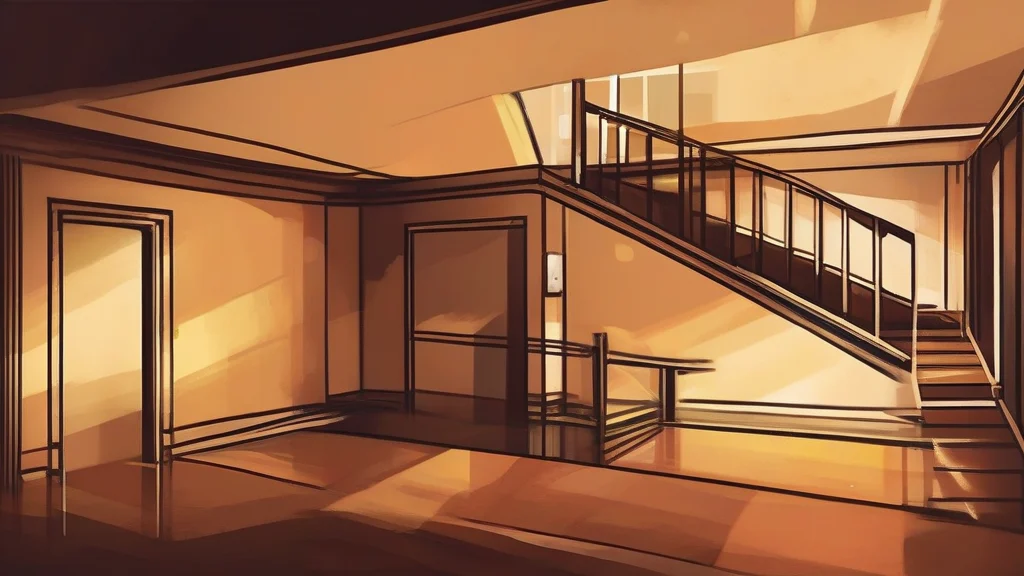
What does downstair mean?
"Downstair" is an English adjective used to describe something located on, belonging to, or characteristic of the lower floor of a building. It pairs naturally with nouns such as "room," "hall," "bathroom," or "parlor" — as in "the downstair study" or "the downstair windows overlook the garden." Although grammatically sound, the word has largely been displaced in modern conversation by "downstairs," which functions flexibly as both an adverb and an adjective; consequently, "downstair" tends to appear in more deliberate or literary prose, architectural descriptions, and older texts. Its opposite is "upstair," which shares a similarly rarefied status. The word derives transparently from the combination of "down" and "stair," reflecting the straightforward way English compounds directional prepositions with household terms. For writers seeking a slightly elevated register when distinguishing between floors, "downstair" remains a precise, if infrequent, choice that clearly signals which level of a building is meant.
adjectiveSituated on, relating to, or characteristic of a lower floor of a building.
- Located on or belonging to a lower floor of a building.
"The downstair rooms were cooler in summer, so the family gathered there during heat waves."
"The downstair bathroom was renovated last spring while the upstairs one remained untouched."
"Guests were shown into the downstair parlor, where tea had already been laid out."
While almost everyone says "downstairs," its older sibling "downstair" survives quietly in formal writing and older texts — proof that even ordinary household words can have rare variants.
Reviewed by Deb Chak, Editor. AI-assisted content curated by RJS Tech Solutions LLP.
Etymology of downstair
The word "downstair" is formed by compounding the native English adverb "down" with "stair," which itself traces back through Middle English "steir" to Old English "stǣger," related to climbing and ascending. It developed alongside the parallel formation "upstair," with both variants emerging alongside their pluralized forms "downstairs" and "upstairs," which eventually became dominant in everyday use. The compound follows a common English pattern of combining directional particles with architectural vocabulary.
Related word forms
How downstair is actually used
This word is relatively uncommon compared to "downstairs." In modern everyday speech, most speakers prefer "downstairs" for both adjectival and adverbial uses. "Downstair" appears chiefly in descriptive writing about architecture or domestic interiors, and it carries a slightly literary or old-fashioned tone.
Easily confused with downstair
"Downstair" is an adjective describing something on a lower floor, while "downstairs" is more commonly used as an adverb or noun referring to movement to or the location of the lower floor.