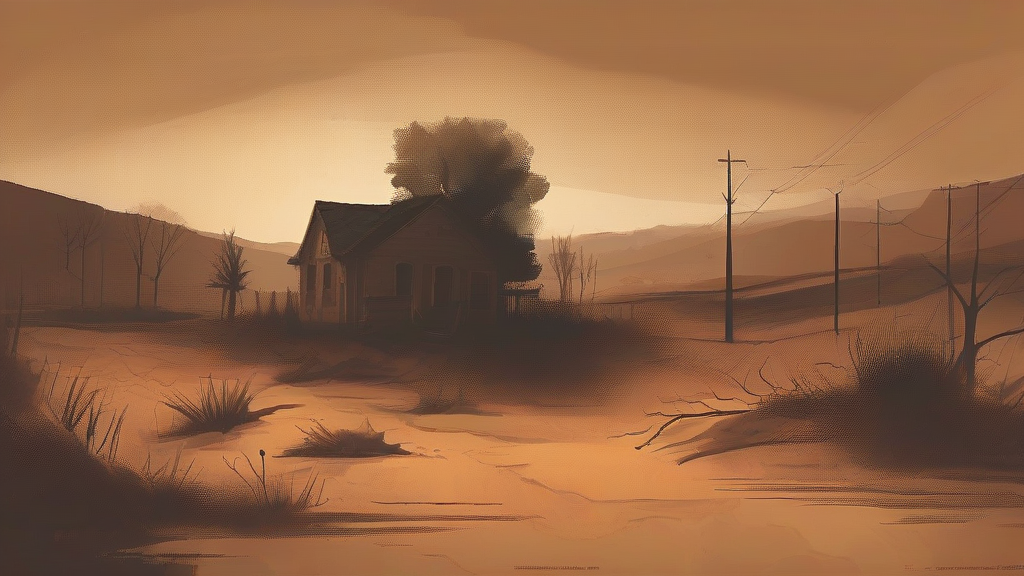
What does drabness mean?
Drabness is the quality of being dull, cheerless, and lacking in colour, brightness, or interest. It derives from the adjective 'drab', which describes something monotonously grey-brown or uninspiring, combined with the noun-forming suffix '-ness'. The word is most often used to describe physical surroundings — buildings, weather, clothing, interiors — but it also appears in figurative contexts, as in 'the drabness of everyday life', where it conveys a sense of tedium and emotional flatness. Because it names both a visual dullness and a more abstract weariness, drabness is a useful word for writers who want to evoke atmosphere economically: a single mention can summon grey skies, shabby streets, or the oppressive sameness of routine. Its connotations are consistently negative but gentle rather than harsh; drabness suggests absence — of colour, variety, joy — rather than active ugliness or misery. It pairs naturally with verbs such as 'lift', 'break', or 'escape' when writers describe relief from dullness, making it a versatile term in both literary description and everyday commentary on design, fashion, and lifestyle.
nounThe quality or state of being dull, cheerless, and lacking in colour, brightness, or interest.
- Dullness and lack of colour or visual appeal, especially of surroundings or appearance.
- Figurative monotony or dreariness, as of daily routine or existence.
"The drabness of the office blocks made the new park feel all the more welcome."
"A few bright cushions did much to lift the drabness of the rented flat."
"He longed for travel as an escape from the drabness of provincial life."
Rarely used; 'drabness' is almost always treated as uncountable. A plural may occasionally appear in literary contexts referring to multiple distinct instances of dullness, but ordinary usage prefers singular or rephrasing.
"The essay catalogues the various drabnesses of suburban architecture — a usage found chiefly in literary criticism."
Before it meant dull, 'drab' was the name of a dull yellowish-brown cloth — so drabness is, quite literally, the colour of undyed fabric.
Reviewed by Deb Chak, Editor. AI-assisted content curated by RJS Tech Solutions LLP.
Etymology of drabness
Drabness is formed from the adjective 'drab' plus the common noun-forming suffix '-ness'. The adjective 'drab' entered English in the sixteenth century, originally denoting a dull, undyed yellowish-brown cloth, and by extension anything of that unremarkable colour; its extended sense of 'dull and cheerless' developed later, and the noun 'drabness' followed. The further origins of 'drab' are debated, so a definitive source language cannot be stated with confidence.
Related word forms
How drabness is actually used
Neutral in register and suitable for both formal and informal writing. The word carries a mildly negative connotation and is typically applied to environments, colours, clothing, or routines rather than to people's character.
Easily confused with drabness
A 'drubbing' is a severe defeat or beating, while 'drabness' refers to dullness and lack of colour or interest.