What does draggled mean?
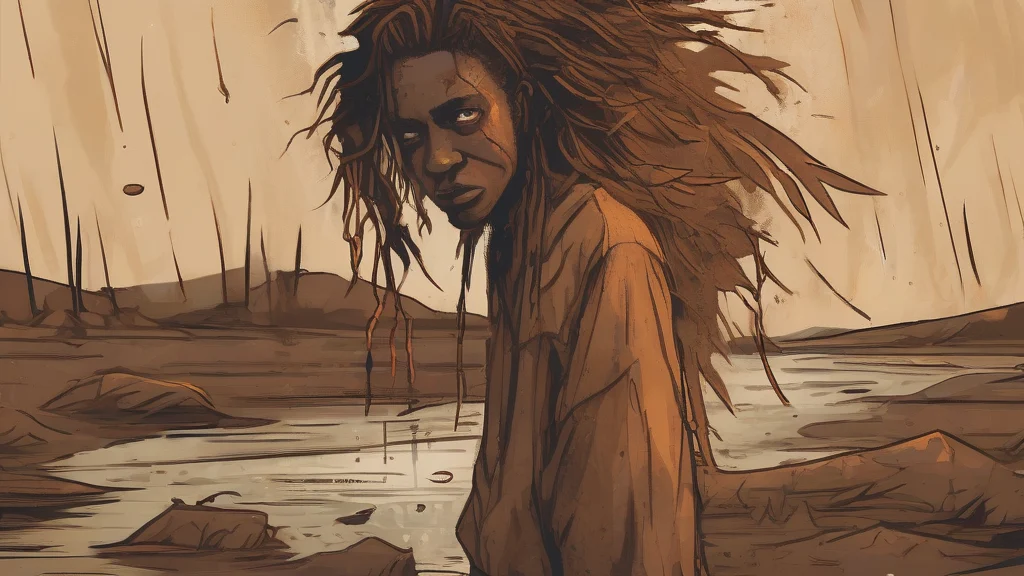
"Draggled" is an adjective describing something — usually clothing, hair, or feathers — that has become wet, dirty, and limp, typically from dragging through mud, water, or mire. A draggled skirt trails sodden at the hem; a draggled hen looks soaked and dishevelled after a rainstorm. The word evokes a vivid physical image of limpness and grime, and it often appears alongside similar descriptions of exhaustion or neglect, as in a traveller arriving draggled after a long journey. It is chiefly literary and descriptive in tone, lending colour to narrative prose more than casual conversation, and it is closely related to the far more common adjective "bedraggled." Derived from the verb "draggle," itself rooted in "drag," the word dates back several centuries and remains a precise, expressive choice whenever you want to convey that particular combination of dampness, dirt, and drooping disorder.
Wet, dirty, and hanging in limp disarray, especially as a result of trailing through mud or water.
"He led his draggled horse into the stable after the long, rainy ride."
Often used attributively before a noun ('a draggled feather'); the form 'bedraggled' is more common in contemporary English.
Past tense and past participle of 'draggle': to make wet and dirty by dragging through mud or water.
"Her gown was draggled by the puddles she had waded through on the way home."
A duck's feathers after a muddy pond dip aren't just wet — they're draggled, one of English's most vivid words for damp, dishevelled misery.
Reviewed by Deb Chak, Editor. AI-assisted content curated by RJS Tech Solutions LLP.
Etymology of draggled
"Draggled" is the adjectival use of the past participle of "draggle," a frequentative verb formed in Middle English from "drag," meaning to trail or cause to hang heavily. The verb appeared in English by the early 16th century, with "draggled" used descriptively thereafter. Its most prominent relative is "bedraggled," which adds the intensifying prefix "be-" and became the dominant form in modern usage. The underlying root connects to the Germanic verb behind "drag" and "draw," giving the word a lineage tied to pulling and trailing along the ground.
Related word forms
How draggled is actually used
"Draggled" is somewhat literary and descriptive in register, appearing more often in narrative prose than everyday speech. It carries a connotation of pitiable or comical disarray rather than moral failing. The fuller form "bedraggled" is considerably more common in modern usage.
Easily confused with draggled
'Straggled' means spread out or wandered in a loose, irregular group or line, while 'draggled' describes being wet, dirty, and limp.
'Waggled' means shaken or moved with a quick wobbling motion, whereas 'draggled' refers to soiling and wetting something until it hangs limply.