What does drawbar mean?
A drawbar is a sturdy metal bar used to couple a vehicle — most commonly a tractor or locomotive — to whatever it must pull, whether a farm implement, trailer, or railway carriage. Fixed firmly to the towing machine, it provides a simple, immensely strong attachment point secured with a pin, transferring the full tractive effort of the engine to the load. The word also has a distinct life in music: on Hammond electronic organs, drawbars are sliding controls that are drawn toward or away from the player to blend harmonics and sculpt the instrument's signature sound. In engineering contexts the word frequently appears in measured phrases like "drawbar pull" or "drawbar horsepower," which quantify an engine's actual pulling power as delivered at the coupling rather than its raw internal output. Unassuming but indispensable, the drawbar exemplifies how a plain piece of forged steel can quietly underpin agriculture, transport, and even popular music.
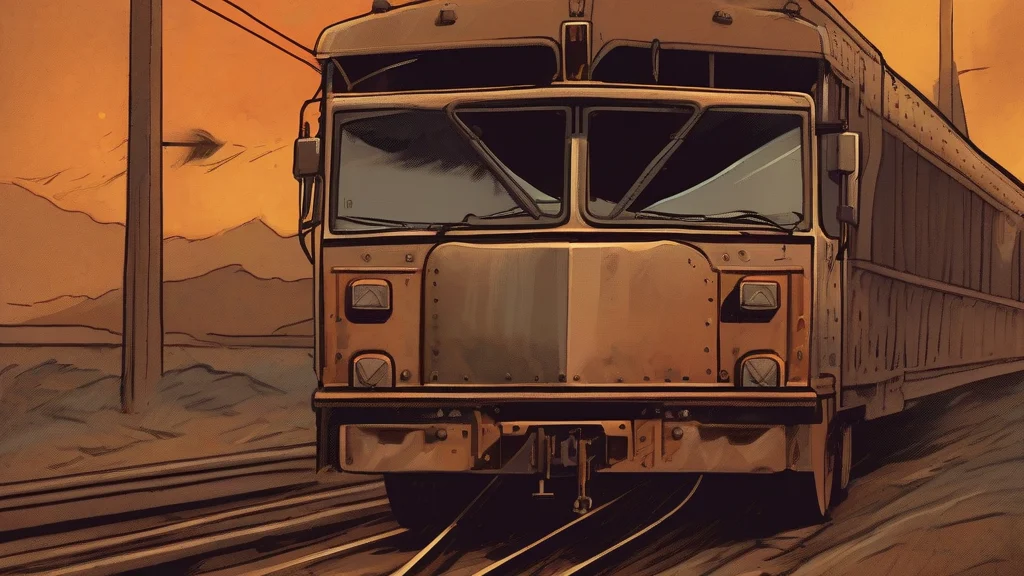
A strong metal bar on a vehicle such as a tractor or locomotive, to which a trailer, implement, or carriage is coupled for towing.
"The locomotive's drawbar took the full strain as the freight train pulled away from the yard."
Often used in technical measurements such as "drawbar pull" and "drawbar horsepower."
A sliding control on an electronic organ or mixing console, adjusted by drawing it in or out to vary volume or harmonic content.
"Pulling the fourth drawbar enriched the flute voice with a warm octave overtone."
Especially associated with the Hammond tonewheel organ, whose nine drawbars mix sine-wave harmonics.
Regular plural; commonly used when referring collectively to an organ's set of drawbars or to the couplings fitted across a fleet of vehicles.
"The organist adjusted several of the drawbars mid-phrase to swell the registration."
The humble drawbar is the unsung hero of every farm and railway — one forged steel bar doing the work of connecting brute engine power to real-world loads.
Reviewed by Deb Chak, Editor. AI-assisted content curated by RJS Tech Solutions LLP.
Etymology of drawbar
Drawbar is a straightforward English compound of the verb "draw" (in its sense of pulling or hauling, from Old English dragan) and "bar" (a rigid rod, from Old French barre). It arose naturally in the vocabulary of haulage and engineering, where machines needed a literal bar by which loads were drawn. Its later adoption in electronic organ terminology extends the same image: a control you physically draw out to adjust the sound. Related compounds built on "draw," such as "drawbridge" and "drawknife," share the same first element.
How drawbar is actually used
"Drawbar" is primarily a technical term used in agricultural engineering, railways, and music. In farming contexts it often appears in specifications such as "drawbar horsepower," which measures an engine's pulling power at the drawbar rather than at the crankshaft. The musical sense is strongly associated with Hammond tonewheel organs, where drawbars shape the harmonic mixture of a note.
Easily confused with drawbar
A drawbridge is a bridge that can be raised or lowered to let traffic pass, whereas a drawbar is a rigid metal bar used to couple vehicles together.
A handlebar is the steering grip of a bicycle or motorcycle; a drawbar is a towing linkage between a tractor or locomotive and its load.