
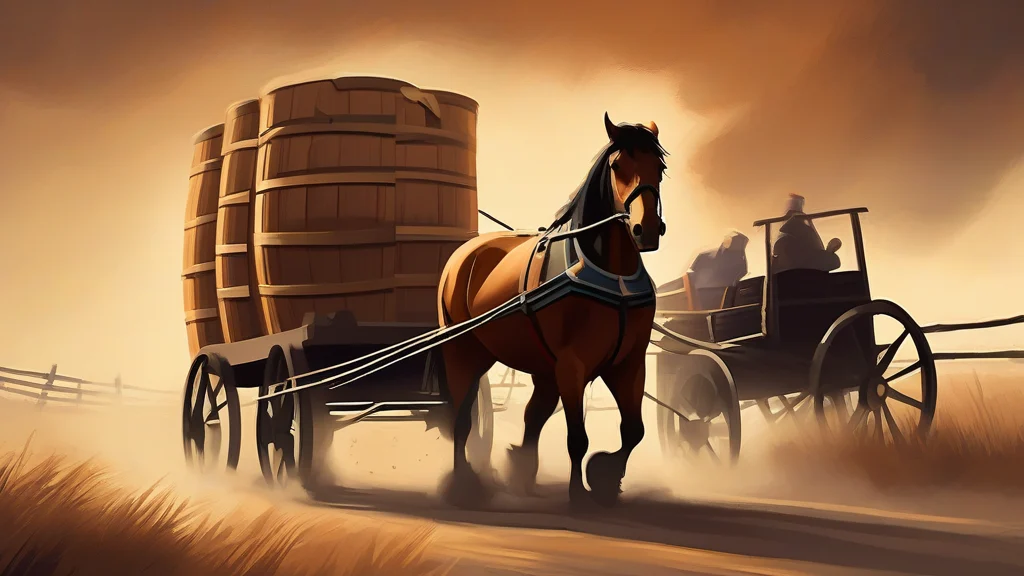
What does drayhorse mean?
A drayhorse is a powerful horse bred and trained to pull a dray — a low, sturdy cart once ubiquitous on city streets for transporting heavy goods, most famously barrels of beer from breweries to public houses. Typically of draught breeds such as the Shire or Clydesdale, drayhorses were prized for their strength, calm temperament, and stamina rather than speed. The word is a compound of 'dray' (the cart) and 'horse', and it belongs chiefly to the vocabulary of the eighteenth through early twentieth centuries, when equine haulage dominated urban commerce. Although motor lorries made working drayhorses obsolete by the mid-twentieth century, several British breweries famously retained them into modern times for advertising, ceremonies, and public appearances, keeping the term alive. Today 'drayhorse' evokes a nostalgic image of industrial-era street life and remains useful in historical, literary, and heritage contexts.
nounA strong horse used for pulling a dray, a low flat cart traditionally employed for delivering heavy loads such as beer barrels or other goods.
- A strong horse trained and used to pull a dray or similar heavy cart, historically associated with breweries and goods delivery.
"The brewery's drayhorse stood patiently outside the pub while the driver delivered the morning's barrels."
"The shire drayhorses clip-clopped down the cobbled lane, pulling a wagon stacked with oak casks."
"As a boy, he had worked as a drayman, driving a pair of drayhorses from the depot to the docks each morning."
Regular plural; typically used when referring to teams of horses working together, as drays were usually pulled by pairs.
"The stable housed six drayhorses during the brewery's heyday."
Before motorised delivery, the sight of massive drayhorses hauling beer through city streets was so beloved that some breweries still keep them today purely for tradition and parades.
Reviewed by Deb Chak, Editor. AI-assisted content curated by RJS Tech Solutions LLP.
Etymology of drayhorse
Drayhorse is an English compound of 'dray' and 'horse'. 'Dray' itself dates to Middle English (attested from around the fourteenth century), denoting a low cart without sides used for carrying heavy loads, and likely derives from Old English 'dræge', related to the verb 'dragan' meaning to draw or drag. The compound thus transparently means 'a horse that draws a dray'. It shares its ultimate root with the words 'draw', 'drag', and 'draught', all stemming from the same Germanic verb of pulling.
How drayhorse is actually used
The word is somewhat old-fashioned and largely historical in modern usage, since motor vehicles have replaced horse-drawn drays; it survives mainly in historical writing, heritage brewing contexts, and descriptions of ceremonial or traditional deliveries. 'Drayhorse' is often written solid, though 'dray horse' as two words also occurs.
Easily confused with drayhorse
A dray is the low cart itself, whereas a drayhorse is the horse that pulls it.