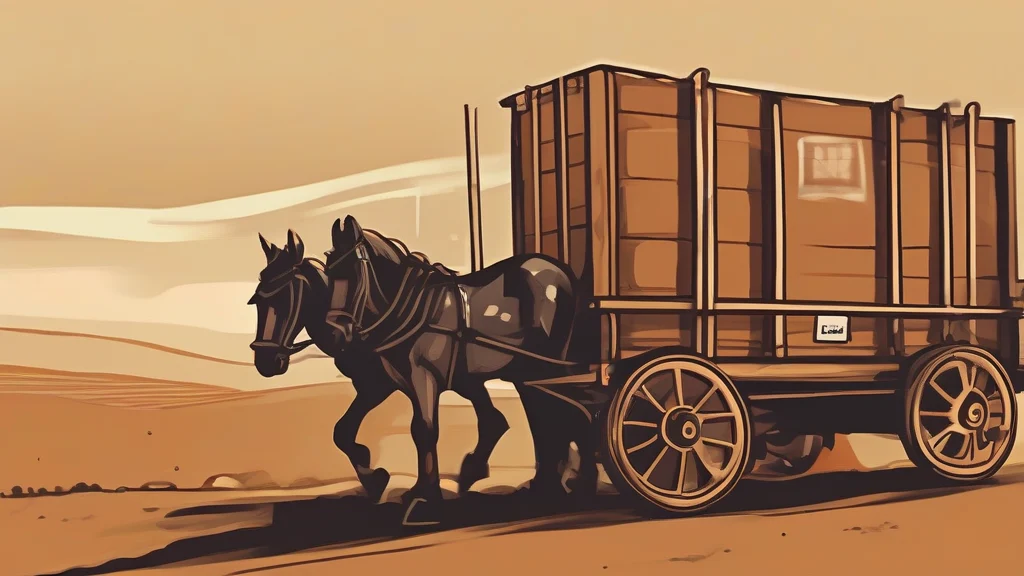
What does draying mean?
Draying is the work of transporting heavy goods by dray — a sturdy, low-sided cart designed for carrying substantial loads such as barrels, crates, and building materials. Historically, drays were drawn by teams of draught horses, and draying was an essential urban trade throughout the eighteenth and nineteenth centuries, linking docks, railways, breweries, and warehouses before motorised lorries took over. The word functions as a noun denoting this activity or business, as in "the firm specialised in draying". Today it survives mostly in historical writing and in the derived term "drayage", which remains standard jargon in freight and container shipping for the short-haul movement of cargo between ships, trains, and storage. For readers of older literature, recognising "draying" clarifies passages describing bustling streets crowded with carts and their powerful horses.
nounThe work or business of transporting heavy goods by dray, a low flat cart traditionally pulled by horses; more broadly, cartage or haulage of goods over short distances.
- The occupation or activity of conveying goods by dray; short-distance cartage or haulage of heavy loads.
"In the nineteenth century, draying was a staple trade in every port city, moving cargo from the docks to warehouses and rail yards."
"His grandfather earned a living from draying, delivering beer barrels to pubs across the city with a pair of shire horses."
"The decline of draying came swiftly once motor lorries proved cheaper and faster than horse-drawn carts."
Rarely pluralised; the noun is almost always treated as uncountable, referring to the activity or trade as a whole rather than countable instances.
"The ledgers record hundreds of individual drayings carried out each week during the harvest season."
Before trucks existed, entire armies of dray horses moved every crate, barrel, and bale between docks and depots — and the trade left its name on 'drayage', still used in shipping today.
Reviewed by Deb Chak, Editor. AI-assisted content curated by RJS Tech Solutions LLP.
Etymology of draying
"Draying" derives from "dray", a word recorded in English by the late Middle Ages, most likely from Old English "dræge", related to the verb "dragan", meaning to draw or drag — the same Germanic root that gives us "draw" and "drag". A dray was thus literally a cart that was dragged or drawn along, typically by horses. From "dray" came the agent noun "drayman", the commercial term "drayage", and the gerundial noun "draying" for the trade itself.
Related word forms
How draying is actually used
"Draying" is now chiefly historical or specialist vocabulary, encountered mainly in discussions of nineteenth-century urban transport, port history, and heritage trades. The related term "drayage" survives actively in modern logistics, where it refers specifically to the short haul of shipping containers between ports, rail terminals, and warehouses.
Easily confused with draying
Drying is the removal of moisture from something, whereas draying is the hauling of goods by a dray — they differ only by one letter but are entirely unrelated in meaning.