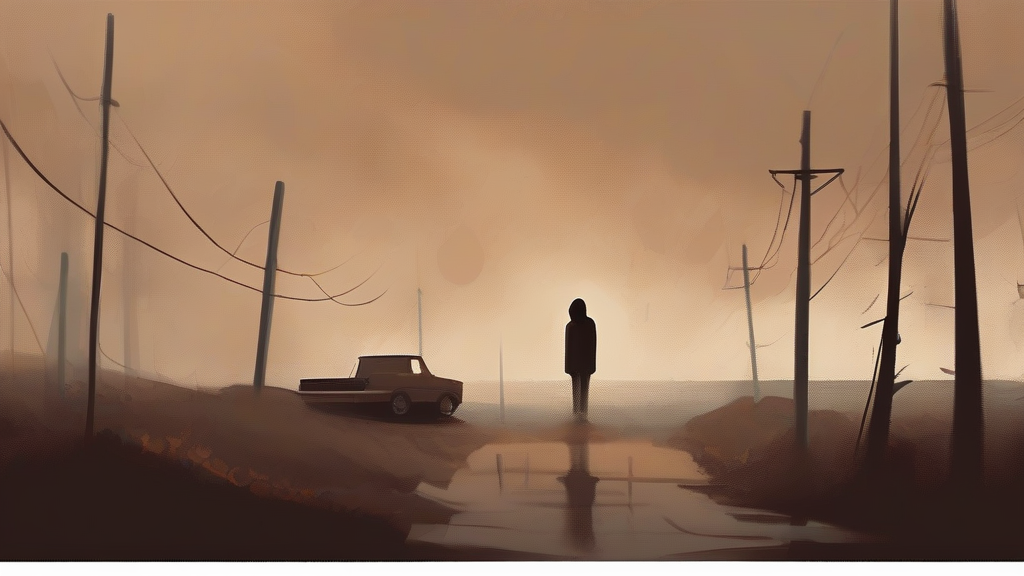
What does dreary mean?
Dreary is an adjective used to describe things that are depressingly dull, bleak, or lifeless. It most often applies to weather and landscapes — a dreary November sky, a dreary stretch of coastline — where it suggests greyness, dampness, and gloom. It also extends to experiences that are tediously unvarying: a dreary job, a dreary meeting, a dreary routine. The word combines two shades of negativity: visual bleakness on one hand and mental boredom on the other, which makes it a compact way to convey an atmosphere of joyless monotony. Its tone is slightly literary but entirely at home in everyday conversation, and its derivatives drearily and dreariness allow the idea to work as an adverb and noun. Notably, the word's history is more vivid than its meaning: it descends from an Old English word that originally meant gory or blood-stained before softening into its modern sense of dullness.
Dull, bleak, and depressing, especially in appearance or atmosphere.
"A cold, dreary rain fell all through the weekend."
Most frequently applied to weather, places, and scenery.
Tediously dull or monotonous; lacking in interest or variety.
"She longed to escape her dreary desk job."
Often used of routines, tasks, and lifestyles rather than physical settings.
Before 'dreary' ever described a boring Tuesday, it meant something far darker: in Old English it literally meant gory or bloody.
Reviewed by Deb Chak, Editor. AI-assisted content curated by RJS Tech Solutions LLP.
Etymology of dreary
Dreary comes from Old English drēorig, which originally meant 'gory' or 'blood-stained', derived from drēor meaning 'blood'. Over the Middle English period the sense shifted from literal gore to sorrowful sadness, and then to the modern meaning of dull and cheerless. It is related to the now-archaic Scots verb 'dree', meaning to endure or suffer, and has cognates in other Germanic languages referring to blood.
Related word forms
How dreary is actually used
Standard in both British and American English; slightly literary in tone but common in everyday speech. It carries a strongly negative connotation of both visual gloominess and tedium, so it suits descriptions of weather, landscapes, buildings, routines, and moods.
Easily confused with dreary
Dreamy means vague, wistful, or pleasant in an unreal way, while dreary means dull and cheerless — the two are near-opposites despite their similar sound.