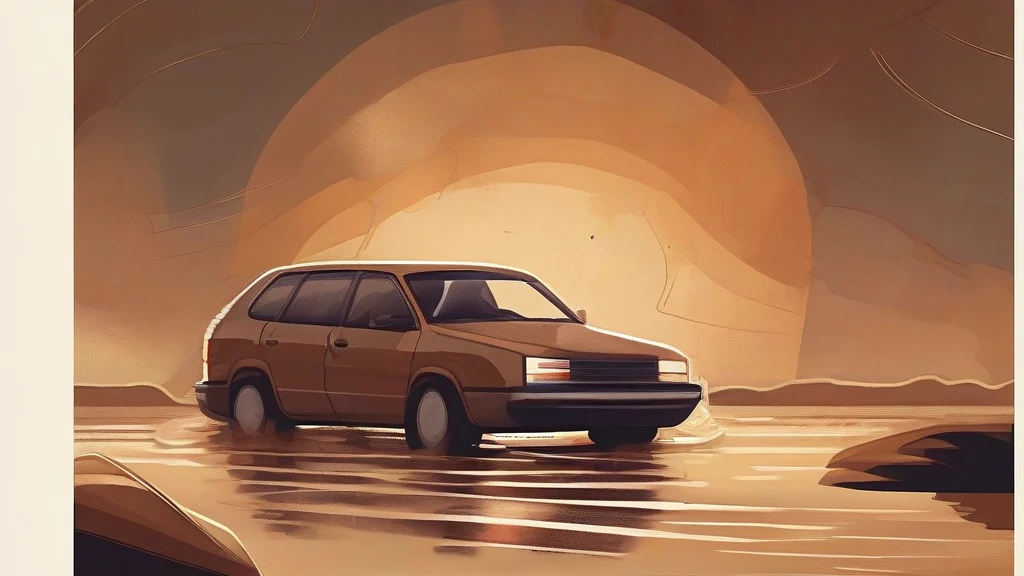
What does drifted mean?
"Drifted" is the past tense and past participle of the verb "drift," describing movement that is slow, passive, and unguided. Its most literal sense covers things carried by wind or water — a boat drifting on a lake, snow drifting against a fence, clouds drifting across the sky. By extension, it captures gradual, often unintended change: friends who drifted apart, a conversation that drifted onto other topics, or a child who drifted off to sleep. Because the word implies an absence of deliberate steering, it frequently carries a gentle, wistful connotation, especially in talk of relationships fading over time. Derived from Middle English and ultimately of Germanic origin, related to words like "adrift," it remains one of English's most versatile verbs for motion without purpose, equally at home in weather reports, fiction, and everyday conversation.
verbPast tense and past participle of "drift": to move slowly, especially as a result of outside forces such as wind or water currents, with no apparent control or direction; by extension, to move gradually away from a person, place, habit, or course of action.
- Moved slowly through air or water, carried by wind or current rather than steered.
- Gradually moved away from a person, group, place, or previous condition, often without deliberate decision.
- Passed or wandered aimlessly from one activity or situation to another.
"The rowboat drifted slowly toward the shore after the rope snapped."
"Leaves drifted down from the maple tree onto the porch."
"After college, the two friends drifted apart and lost touch entirely."
The same word that describes a boat slipping its moorings also quietly describes friendships fading — English has few verbs so gentle about loss.
Reviewed by Deb Chak, Editor. AI-assisted content curated by RJS Tech Solutions LLP.
Etymology of drifted
"Drift" comes from Middle English "driften," meaning to drive or float, and traces back to Old English "drīfan" (to drive), a common Germanic verb also seen in Dutch "drijven" and German "treiben." The noun sense of slow movement developed from the idea of something being driven along by wind or water. Cognates within English include "adrift" and the related word "rift," all rooted in the notion of being carried or forced along.
Related word forms
How drifted is actually used
Neutral to slightly wistful in connotation: it often implies passivity or a lack of intent, which can sound melancholy when applied to relationships. In informal speech, "drifted off" is the standard way to say someone fell asleep gradually.
Easily confused with drifted
"Drafted" means selected, enlisted, or drawn up in writing, while "drifted" means moved slowly without direction — the words look similar but share no meaning.