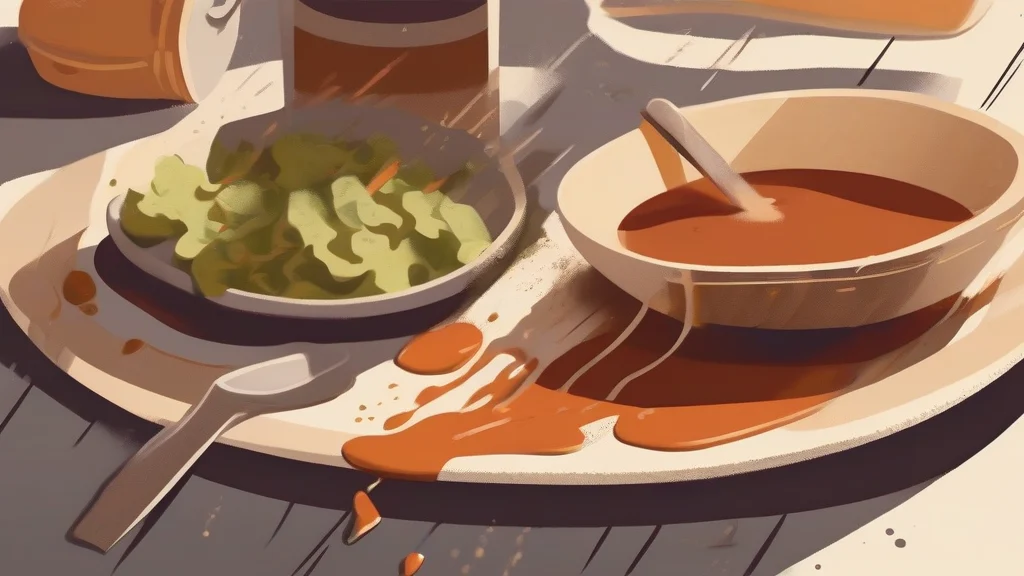
What does drizzled mean?
"Drizzled" is the past tense and past participle of the verb "drizzle," which has two main uses. The older sense describes light rain falling in fine, sparse droplets — weather too gentle to warrant an umbrella but damp enough to notice. The more prominent modern sense is culinary: to pour a thin, unhurried stream of liquid, such as olive oil, honey, cream, or melted chocolate, over a dish, often as a finishing touch. This kitchen usage connotes delicacy and care; a chef who has drizzled a plate has added flavor and visual polish without overwhelming it. The word likely arose in sixteenth-century England as an imitative formation suggesting fine, continuous patter. Its derivatives include the noun "drizzle" (both the rain itself and a thin stream of liquid) and the adjective "drizzly." Ubiquitous in recipes and weather reports alike, "drizzled" is a small word that captures one of English's favorite themes: moderation, texture, and restraint in both nature and cuisine.
verb (past tense and past participle of drizzle)Past tense and past participle of drizzle: to rain lightly with fine droplets, or to pour a thin stream of liquid such as oil, syrup, or icing over food.
- To have poured a thin, gentle stream of liquid over food or another surface (most common today, especially culinary usage)
- To have fallen as fine, light rain
- (Of a liquid) to trickle or flow in a thin slow stream
"The chef drizzled balsamic glaze over the burrata just before serving."
"She drizzled lemon vinaigrette over the roasted asparagus."
"We got caught outside while it drizzled all afternoon."
It took until the 16th century for English to bother naming light rain — and once it did, the word drifted straight from weather into the kitchen.
Reviewed by Deb Chak, Editor. AI-assisted content curated by RJS Tech Solutions LLP.
Etymology of drizzled
The verb drizzle first appeared in English in the sixteenth century, its origin uncertain though widely thought to be imitative of the soft, persistent sound of light rain. It may be related to the dialectal English word "dryseling" recorded around 1400. From its original weather meaning, the verb extended naturally by metaphor to any thin, gentle flow of liquid, giving rise to the common culinary sense. No strong foreign cognates exist, as the word appears to be a native English formation.
Related word forms
How drizzled is actually used
As a verb form, 'drizzled' carries a connotation of gentleness and deliberateness: a drizzled rain never soaks you quickly, and a drizzled sauce implies care and finesse rather than heavy-handed pouring. In modern food writing it is almost a cliché of recipe language, often paired with olive oil, honey, or melted chocolate. The weather sense is more common in British English, where drizzle is frequent enough to be a staple of daily forecasts.
Easily confused with drizzled
Sizzled means made a hissing sound while cooking in hot fat or water; drizzled means rained lightly or poured a thin stream of liquid over something.