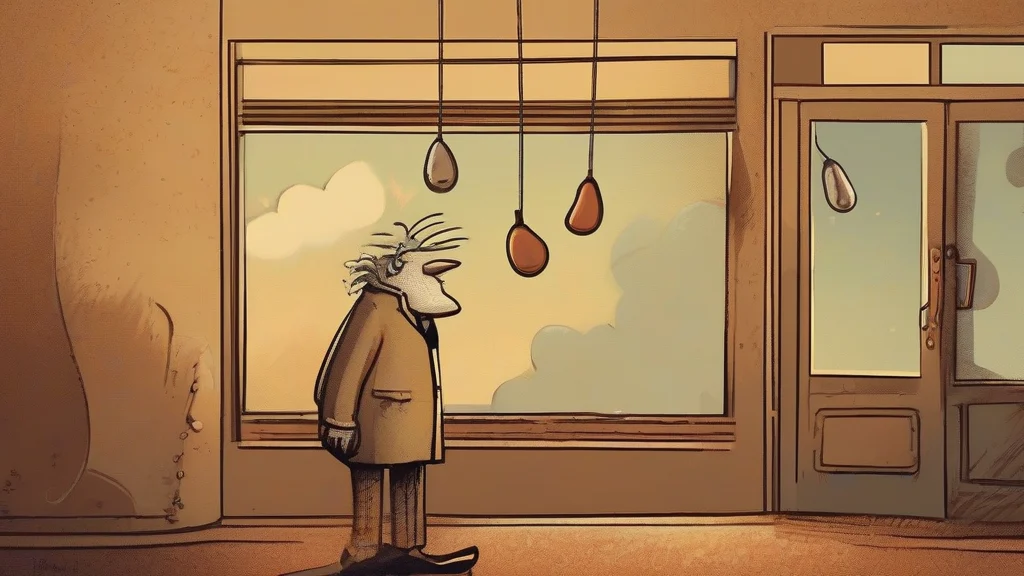
What does drollness mean?
Drollness is the noun form of the adjective 'droll' and denotes a distinctive kind of humor: one that is dry, understated, and gently odd rather than loud or obvious. A person with drollness makes others laugh not through jokes told at full volume but through unexpected observations, deadpan delivery, and a taste for the absurd lurking inside the ordinary. The word appears most often in literary criticism and reviews, where writers praise novels, essays, or performances for their drollness, signaling a sophisticated, restrained comic sensibility. Its connotations are almost entirely favorable — drollness suggests intelligence, irony, and self-possession. It derives from 'droll', which entered English in the seventeenth century from French 'drôle', itself rooted in a Middle Dutch word for an impish, mischievous creature. Related forms include the adjective 'droll', the adverb 'drolly', and the noun 'drollery'. Anyone describing comedy that smiles sideways rather than laughs out loud will find drollness the precise term for it.
nounThe quality of being droll; a dry, understated humor that amuses through oddness or whimsy rather than overt comedy.
- A dry, understated sense of humor expressed through odd or whimsical observations rather than broad comedy.
"Her essays are loved for their gentle drollness, finding absurdity in the most ordinary routines."
"The professor delivered his critique with such drollness that even the students being criticized laughed."
"British sitcoms often trade on a quiet drollness that rewards attentive viewers rather than demanding laughter."
Almost never pluralized; the word normally functions as an uncountable mass noun referring to a quality.
Behind this unassuming noun lies a Dutch word for an impish little goblin — 'droll' originally meant a mischievous sprite before it came to mean dryly funny.
Reviewed by Deb Chak, Editor. AI-assisted content curated by RJS Tech Solutions LLP.
Etymology of drollness
Drollness is formed by adding the suffix '-ness' to the adjective 'droll', which entered English in the early seventeenth century from French 'drôle', meaning 'amusing' or 'queer'. French in turn took the word from Middle Dutch 'drolle', which denoted an imp, scamp, or mischievous little fellow — giving the modern word a surprisingly goblin-like ancestry. The related English noun 'drollery', meaning a droll remark or comic picture, shares this same lineage.
Related word forms
How drollness is actually used
Drollness is a somewhat literary word, more likely to appear in criticism and book reviews than in casual speech. It carries a positive connotation of wit that is subtle and self-controlled, never loud or slapstick.
Easily confused with drollness
Drollness is the abstract quality of being amusingly odd, while drollery refers either to that same quality or to a droll saying, picture, or performance — it can name both the trait and its concrete expression.