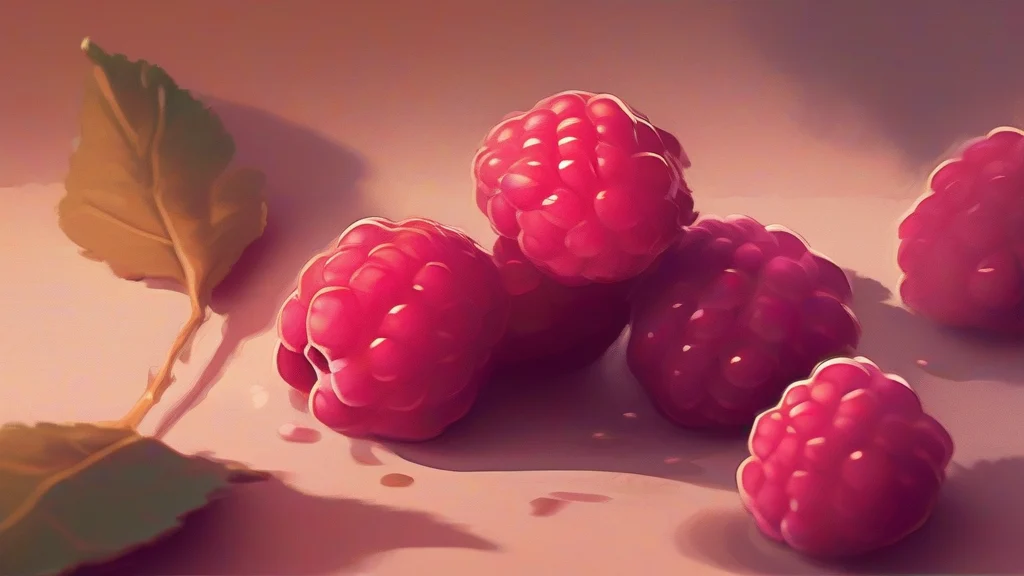
What does drupelet mean?
A drupelet is one of the small, individual fruitlets that together make up an aggregate fruit such as a raspberry or blackberry. Each drupelet is itself a miniature drupe — a tiny fleshy fruit containing a single seed surrounding a hard endocarp, much like a minuscule plum. When many ovaries in a single flower develop independently, they produce these clustered units, which is why a raspberry appears to be one berry yet is botanically dozens of fruits fused at the base. The term is chiefly botanical, appearing in scientific descriptions, horticultural literature, and culinary writing that aims for precision about berry structure. Its value lies in accuracy: rather than loosely calling raspberry beads 'segments' or 'bumps,' a writer can use drupelet to name exactly what each unit is. Derived from drupe by adding the diminutive suffix '-let,' the word literally means 'little drupe,' making it both descriptive and easy to remember.
nounA small drupe; specifically, one of the individual fleshy segments that together make up an aggregate fruit such as a raspberry or blackberry.
- One of the small individual drupes that collectively form an aggregate fruit, as in raspberries and blackberries.
"Each tiny sphere on a raspberry is a drupelet, a miniature fruit in its own right."
"Botanists note that each drupelet of the blackberry contains a single seed encased in juicy flesh."
"She rinsed the berries gently so that no drupelet would be crushed."
The plural follows regular English noun inflection; it typically refers to the many individual units of one or more aggregate fruits.
"The ripe blackberries were plump, their glossy drupelets tightly packed."
Every raspberry is secretly a cluster of dozens of fruits — each glistening bead is its own miniature drupe called a drupelet.
Reviewed by Deb Chak, Editor. AI-assisted content curated by RJS Tech Solutions LLP.
Etymology of drupelet
Drupelet is formed from drupe plus the diminutive suffix '-let', literally meaning 'a little drupe.' The base word drupe comes from Latin drupa, meaning an overripe or wrinkled olive, which itself derives from Greek druppa, referring to an olive. The compound reflects the botanical observation that each unit of a raspberry or blackberry is structurally a tiny stone fruit in its own right. Cognate forms include the adjective drupaceous, used to describe plants bearing drupes.
How drupelet is actually used
Drupelet is primarily a botanical term, appearing most often in scientific writing, gardening guides, and food writing about berries; it is uncommon in everyday conversation but transparent once explained.
Easily confused with drupelet
A drupe is a whole stone fruit such as a peach or plum with a single hard pit, whereas a drupelet is one tiny drupe-like unit within an aggregate fruit like a raspberry.