
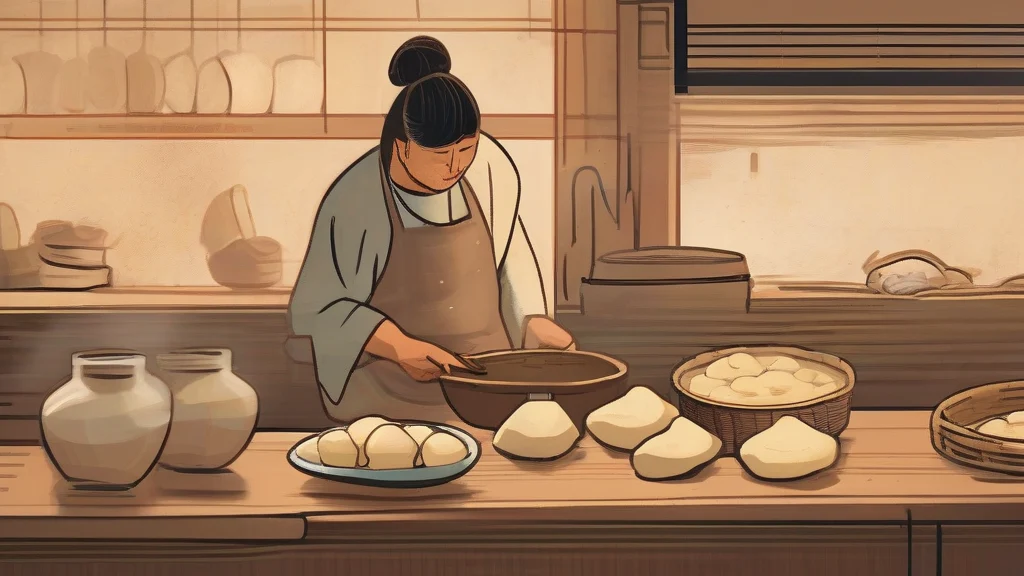
What does dumpling mean?
Dumpling is a common English noun for a small piece of dough, often filled with meat, vegetables, cheese, or another mixture and boiled, steamed, or fried. The term is used in British, American, and international English for foods that may differ greatly in shape, filling, and seasoning, including crescent-shaped Chinese dumplings, round soup dumplings, and European filled pasta. It can also mean a plain lump of dough cooked in soup or stew. In informal figurative language, a dumpling may be a person regarded as dull, clumsy, or ineffectual, though this use can sound old-fashioned or disparaging. The word is especially useful in culinary writing because it captures the shared idea of dough enclosing or accompanying a filling without imposing a single cultural recipe.
nounA small piece of dough, usually filled with meat, vegetables, cheese, or another savory mixture and boiled, steamed, or fried. By extension, the word can refer to an unfilled lump of dough cooked in soup or stew.
- A small piece of dough, typically filled with a savory mixture and cooked by boiling, steaming, or frying.
- An unfilled or simply prepared lump of dough cooked in soup, stew, or another liquid.
- In informal or figurative use, a person considered dull, clumsy, or ineffectual.
"She served steamed dumplings with soy sauce and chili oil."
"We ordered chicken dumplings and a bowl of noodle soup."
"The old expression 'as pleased as a dumpling' describes someone who is especially pleased."
Dumpling is a countable noun; use the plural when referring to more than one dumpling or to a dish containing several.
"The children shaped the dough into small dumplings before boiling them."
Dumpling is less a single recipe than a broad family of dough-filled foods, with every culture putting its own filling, shape, and cooking method on the table.
Reviewed by Deb Chak, Editor. AI-assisted content curated by RJS Tech Solutions LLP.
Where does dumpling come from?
The exact origin of dumpling is uncertain, but the word is commonly linked to Middle English damp, meaning doughy or moist, and related to damp, dampness, and dampen. It was used in English by the early modern period for a lump or piece of dough. Its culinary meaning later broadened as filled and filled-parcel forms became established in British and other European cuisines.
How dumpling is actually used
In culinary contexts, dumpling is broadly used in British and American English, as well as many other varieties of English, for a wide range of filled dough foods rather than one specific item. The figurative sense is informal and can be mildly disparaging when applied to a person.