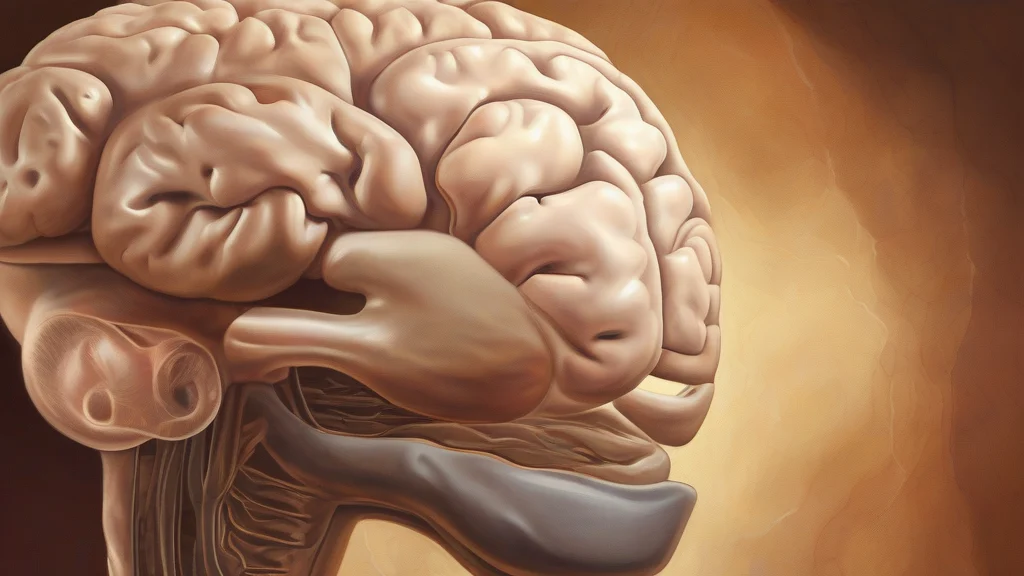
What does dural mean?
"Dural" is an adjective used almost exclusively in medicine and anatomy to describe anything relating to the dura mater — the tough, leathery outermost of the three membranes (the meninges) that envelop and protect the brain and spinal cord. Because the dura is the sturdiest of these coverings, injuries and procedures are often described in terms of it: a "dural tear" refers to a breach in this membrane that can allow cerebrospinal fluid to leak, while "post-dural-puncture headache" names the well-known complication that can follow a spinal tap or epidural. The word appears chiefly in clinical, surgical, and radiological writing — in imaging reports, operative notes, and neurological literature — rather than in everyday conversation. Its Latin root, durus meaning "hard," also gives English words like "durable" and "endure," a fitting ancestry for a membrane named for its toughness.
adjectiveRelating to or situated in the dura mater, the tough outermost membrane enclosing the brain and spinal cord.
- Of or relating to the dura mater, the toughest and outermost of the three meninges surrounding the brain and spinal cord.
"The MRI revealed a dural tear following the head injury."
"Surgeons carefully repaired the dural defect to prevent a cerebrospinal fluid leak."
"An epidural injection is delivered outside the dural sac rather than within it."
The "dura" in dural comes from Latin for "hard" — medieval anatomists literally called the brain's outer covering the "hard mother."
Reviewed by Deb Chak, Editor. AI-assisted content curated by RJS Tech Solutions LLP.
Etymology of dural
"Dural" derives from the Latin durus, meaning "hard" or "tough," via the anatomical term dura mater — literally "hard mother" — so named by medieval anatomists because the membrane was seen as tough and protective. The adjective simply adds the standard suffix -al to form a relational term used throughout modern medical Latin-influenced vocabulary. Words sharing the same root include "durable," "endure," "duress," and "obdurate," all ultimately tracing back to the same Latin adjective for hardness.
How dural is actually used
"Dural" belongs almost entirely to medical and anatomical register; it appears mainly in clinical, surgical, and radiological contexts such as descriptions of dural tears, dural ectasia, or post-dural-puncture headache. It is not used in everyday speech, though lay readers may encounter it in medical reports or discussions of procedures like lumbar punctures.
Easily confused with dural
"Dual" means consisting of two parts, while "dural" is a medical term relating to the dura mater surrounding the brain and spinal cord.