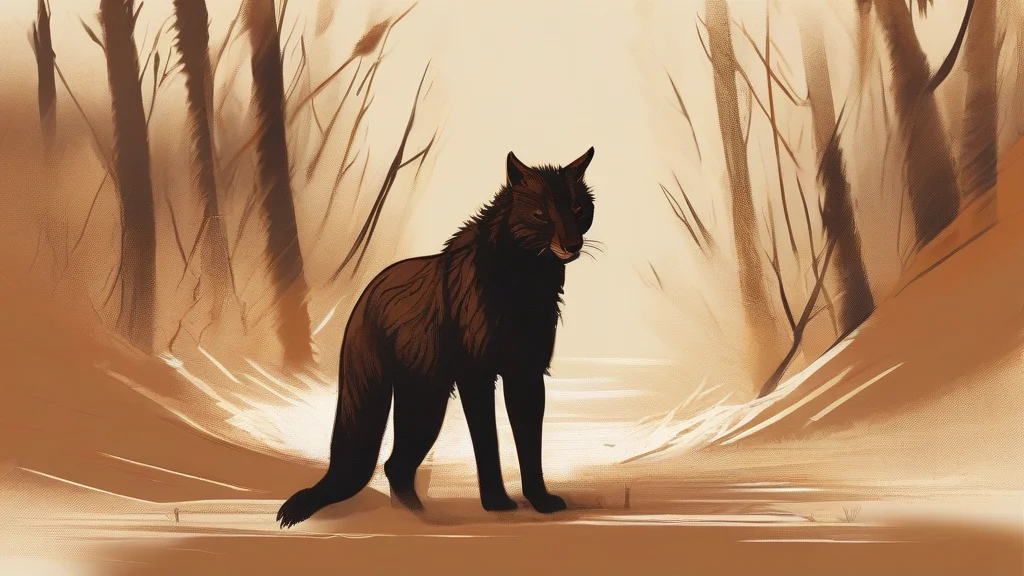
What does feral mean?
Feral describes an animal that lives in a wild state despite descending from domesticated ancestors — a stray dog that has reverted to hunting for its food, or a horse born free on open rangeland. The term is distinct from 'wild': wolves are wild, but mustangs roaming Nevada are feral, since their lineage traces back to once-domesticated horses. By extension, feral is used informally of people or behaviour that seems savage, unkempt, or beyond control, as when someone is said to have 'gone feral' during time spent away from civilisation. The word carries connotations of independence and resilience when applied admiringly, but also of danger, neglect, and disorder when applied critically. It derives ultimately from the Latin 'ferus', meaning wild, making it a close cousin of words such as ferocious, ferocity, and fierce. For anyone writing about wildlife management, ecology, or animal welfare, feral is a precise and valuable term.
(Of an animal) existing in a wild state although descended from domesticated ancestors.
"Feral rabbits have caused extensive damage to the hillside vegetation."
Applied only to animals or plants of domesticated origin living wild; never-wild species are described simply as wild.
(Figuratively) savage, uncontrolled, or wildly unkempt in manner or appearance.
"The children came back from summer camp looking positively feral."
Informal register; often humorous or mildly critical.
Feral comes straight from the Latin 'ferus', meaning 'wild beast' — the same root behind words like ferocious and fierce.
Reviewed by Deb Chak, Editor. AI-assisted content curated by RJS Tech Solutions LLP.
Etymology of feral
Feral entered English in the early seventeenth century, borrowed directly from the Latin adjective 'feralus', meaning wild or savage, which itself derives from 'ferus', the Latin word for a wild beast. This same Latin root produced English 'ferocious' and 'ferocity', and through Old French gave rise to the English word 'fierce'. A now-rare sibling form, 'ferine', preserves the same origin and shares the sense of belonging to wild beasts.
Related word forms
How feral is actually used
In its primary sense, feral applies strictly to animals (or occasionally plants) descended from domesticated stock now living wild — it does not apply to animals that were never domesticated, which are simply 'wild'. The figurative use describing people's behaviour is informal and can be humorous or derogatory depending on tone.
Easily confused with feral
A ferule is a rod or flat piece of wood formerly used to punish schoolchildren, whereas feral describes wild or untamed animals and behaviour.