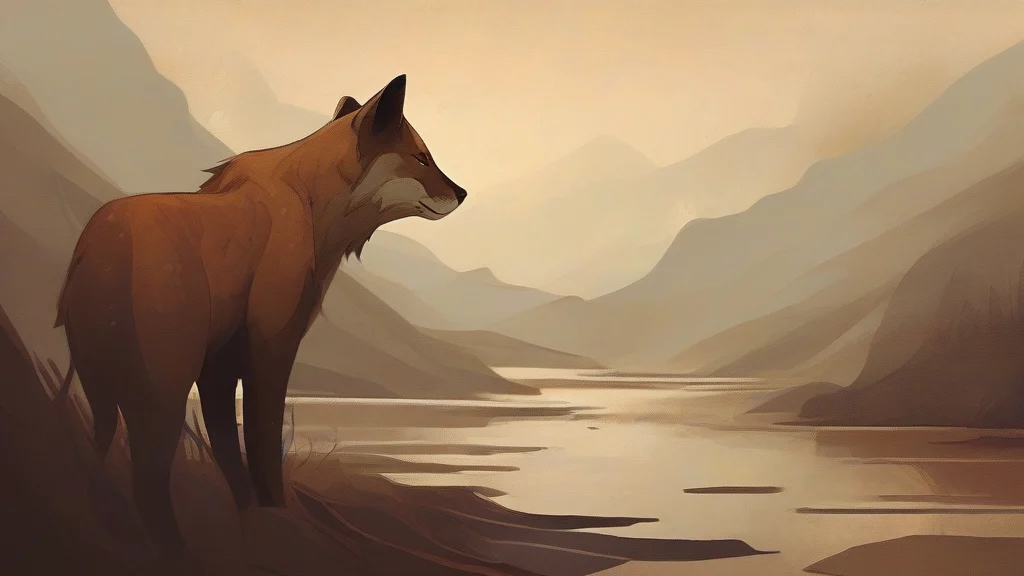
What does ferine mean?
Ferine is a literary adjective meaning wild, savage, or characteristic of a wild beast. Applied literally, it describes undomesticated animals — a ferine gleam in a wolf's eyes, the ferine grace of a big cat — but it is perhaps most evocative when transferred to people, suggesting an uncivilized or predatory streak beneath a composed surface. The word derives from Latin ferus, meaning wild or untamed, the same root that gave English 'feral', 'ferocity', and ultimately 'fierce'. Ferine entered English in the early seventeenth century and has never been common; it survives today mainly in elevated prose and literary criticism, where its slightly archaic flavour lends force. Writers reach for it when they want something more textured than 'wild' — a word that evokes the beast latent within, rather than mere absence of domestication. Related forms such as the noun 'ferity' (savagery) share its lineage.
adjectiveOf an animal, or by extension a person or manner: wild, savage, or characteristic of a wild beast. A literary synonym of 'feral', now somewhat rare and formal.
- Wild, savage, or beastlike in nature — used of animals, or figuratively of people, glances, or behaviour.
"The wolves moved through the forest with a ferine grace."
"The wolves moved through the forest with a ferine grace."
"There was something ferine in his stare, as though civility were only a thin mask."
Every time you call a cat 'feral', you're echoing 'ferus' — the Latin word for 'wild' that also gave English 'ferine', 'ferocity', and even 'fierce'.
Reviewed by Deb Chak, Editor. AI-assisted content curated by RJS Tech Solutions LLP.
Etymology of ferine
Ferine comes from Latin ferus, meaning 'wild' or 'untamed', via the Late Latin adjective ferinus, 'of wild beasts'. It entered English in the early seventeenth century, when scholarly borrowings from Latin were enriching the literary vocabulary. The same root produced 'feral', 'ferity', 'ferocity', and — through Old French — 'fierce', making ferine part of a family of words all circling the idea of untamed wildness.
How ferine is actually used
A formal, literary word; in everyday contexts 'feral' is far more common. It carries connotations of untamed savagery and is often used figuratively to suggest an animal glint in a person's expression or manner.
Easily confused with ferine
'Feral' describes a once-domesticated animal that has returned to the wild, while 'ferine' more broadly means wild or beastlike and is chiefly literary.
'Ferrous' means containing iron (from Latin ferrum), whereas 'ferine' means wild or untamed (from Latin ferus).