
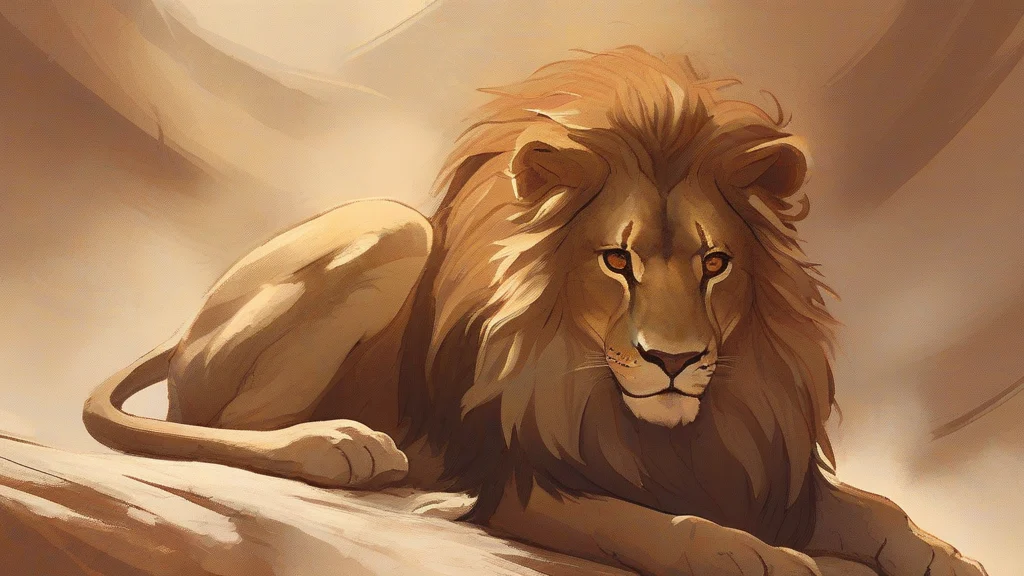
What does leonine mean?
Leonine is a formal, literary adjective meaning lion-like. It can describe a person's appearance, bearing, courage, dignity, or commanding presence, often suggesting exceptional strength, authority, and fearlessness. The word is not restricted to people: writers may call an animal, object, or landscape leonine when its qualities evoke a lion's imposing physical power. For example, a sculpture might possess leonine features, while a person's leadership might display leonine courage. Because the word is relatively uncommon, it often gives prose a grand or elevated tone and is best suited to descriptive or literary contexts rather than everyday conversation. Its unusual sound and strong associations make it especially effective in characterization and vivid imagery. Leonine ultimately comes from Latin leo, meaning “lion,” and belongs to the same etymological family as lion and lionize.
adjectiveResembling or suggesting a lion, especially in appearance, courage, dignity, or power; lion-like.
- Adjective: Resembling a lion in appearance, bearing, courage, dignity, or power.
"Despite his quiet manner, the young king possessed a leonine courage that inspired his soldiers."
"The sculptor gave the emperor a leonine mane and a commanding gaze."
"Her leonine courage carried the team through the most difficult part of the journey."
Leonine brings the lion into language without needing to put the animal in the room.
Reviewed by Deb Chak, Editor. AI-assisted content curated by RJS Tech Solutions LLP.
Where does leonine come from?
Leonine comes through Medieval Latin leoninus, meaning “of or like a lion,” from the Latin leō, meaning “lion.” English borrowed the adjective in the early 17th century, when leonine was especially associated with lion-like courage or majesty. Its modern relatives include lion, lioness, and lionize, all ultimately connected with the same Latin word for “lion.”
How leonine is actually used
Leonine is literary and relatively uncommon. It is typically used to describe a person's bearing, appearance, courage, or authority through a sustained comparison with a lion, rather than as a literal zoological term.