
What does lion mean?
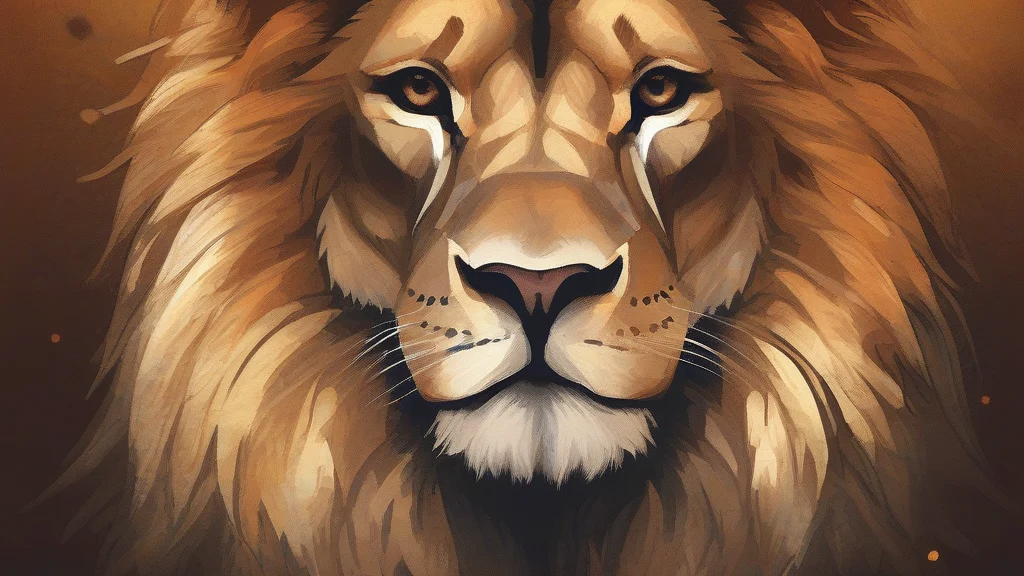
A lion is a large wild cat native to parts of Africa and Asia, best known for its powerful build, distinctive mane, and formidable roar. In ordinary use, the word most often refers to the animal itself, including the adult male, the female, and the young, which are called cubs. A group of lions is called a pride. Figuratively, a lion may describe a person who is brave, commanding, influential, or exceptionally impressive; this use often appears in journalism, literature, and informal speech, where it can suggest leadership and strength but occasionally hints at arrogance or aggression. The word also names the constellation Leo, traditionally represented by a lion. Because it combines a clear image of physical power with a strong association with courage and dominance, lion remains a useful and vivid word in both factual descriptions and figurative language.
nounA large, powerful carnivorous cat with a golden or tawny coat, a mane in adult males, and a roaring roar. Figuratively, the word can refer to a person regarded as brave, commanding, impressive, or formidable.
- A large tawny or golden wild cat, especially the adult male, which typically has a mane and lives in parts of Africa and Asia.
- A person regarded as exceptionally brave, powerful, impressive, or dominant.
- The constellation Leo, also called the Lion.
"The lion rested in the shade while the rest of the pride moved across the grassland."
"A lion appeared at the edge of the campsite and watched the travelers carefully."
"She became a political lion during the campaign, commanding national attention."
The standard plural is lions. In the figurative sense, it refers to multiple people regarded as powerful, impressive, or dominant.
"Two former champions became lions of the political stage."
A lion belongs to the genus Panthera, the same cat family that includes tigers, leopards, and jaguars.
Reviewed by Deb Chak, Editor. AI-assisted content curated by RJS Tech Solutions LLP.
Where does lion come from?
The English word descends through Old French lion from Latin leō, genitive leōnis. Latin leō reflects Greek leōn, the source of related forms such as leonine. English later developed words including lioness, lionize, and leonine from this same lexical lineage.
Related word forms
How lion is actually used
The animal sense is standard in formal and informal contexts. The figurative sense is mainly informal or literary and usually carries praise, suggesting courage, authority, or commanding presence, though it can sometimes imply aggression or self-importance.