What does durbar mean?
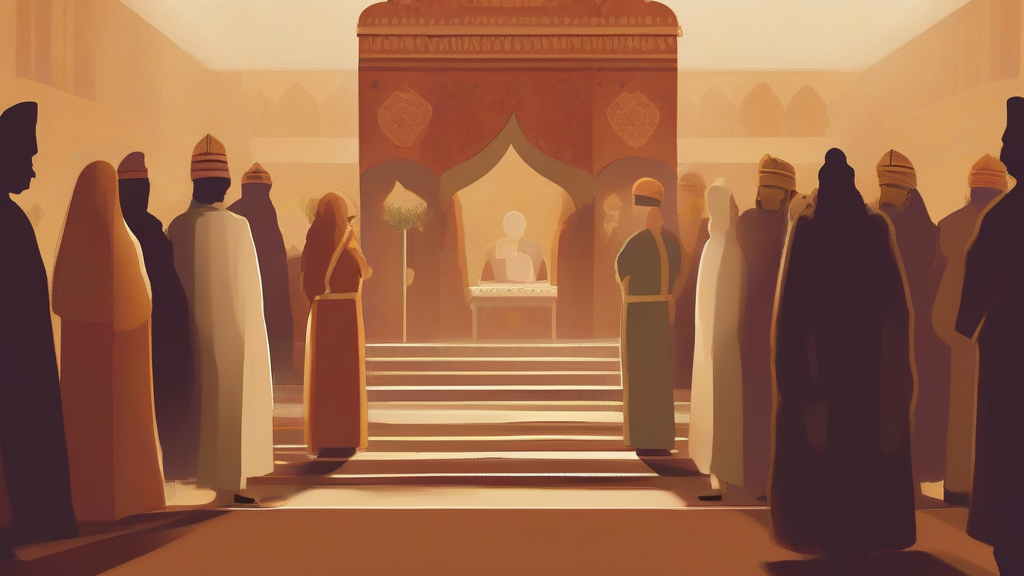
A durbar is the court or audience hall of an Indian ruler, and by extension any grand ceremonial assembly held there. The word entered English during the colonial period, when it was applied both to the traditional courts of princes and nawabs and to the lavish public spectacles staged by the British administration, most famously the imperial Durbars at Delhi celebrating royal proclamations. A durbar implied formality, hierarchy, and spectacle: petitioners sought audiences before the throne, and honors were conferred amid elaborate ritual. Today the word survives mainly in historical writing about Mughal and British India, though it retains everyday use in South Asian English for official receptions and courts of ceremony. Its associations are those of pomp, authority, and a vanished political world, making it a vivid term whenever the theater of power is the subject.
nounThe court or formal audience hall of an Indian ruler; by extension, a grand ceremonial assembly held by a native prince or, historically, by the British colonial government in India.
- The court or hall of audience of an Indian ruler, where he received visitors and conducted state business.
- A grand ceremonial reception or public assembly, especially one staged under British rule in India, such as the imperial Durbars at Delhi.
"The viceroy presided over a magnificent durbar to proclaim the new emperor."
"Petitioners waited for hours outside the maharaja's durbar, hoping for an audience with the ruler."
"Photographs of the 1903 Delhi Durbar capture the pageantry of the British Raj at its most opulent."
Regular plural; used when referring to multiple courts or ceremonial assemblies.
"Travelers' accounts describe the splendor of several princely durbars across Rajasthan."
At the 1911 Delhi Durbar, King George V became the only British monarch ever to be crowned Emperor of India in person.
Reviewed by Deb Chak, Editor. AI-assisted content curated by RJS Tech Solutions LLP.
Etymology of durbar
Durbar comes from Persian darbār, literally 'door' (dar) plus 'court' (bār), meaning a ruler's court or place of audience. The word passed into Urdu, Hindi, and other languages of the subcontinent, and English adopted it during its expansion in India, with written evidence from the late 16th and early 17th centuries. It shares the Persian element dar ('door, gate') with words such as dervish, which originally connoted one who goes from door to door begging alms.
How durbar is actually used
The word carries strong historical and colonial connotations today; it is chiefly encountered in historical writing about Mughal and British India, though it remains current in South Asian English for official courts and receptions. It is often capitalized when referring to a specific named event, as in the Delhi Durbar.
Easily confused with durbar
Durra is a variety of sorghum grain grown in arid regions, whereas a durbar is a ceremonial court or public audience in South Asia.