What does durian mean?
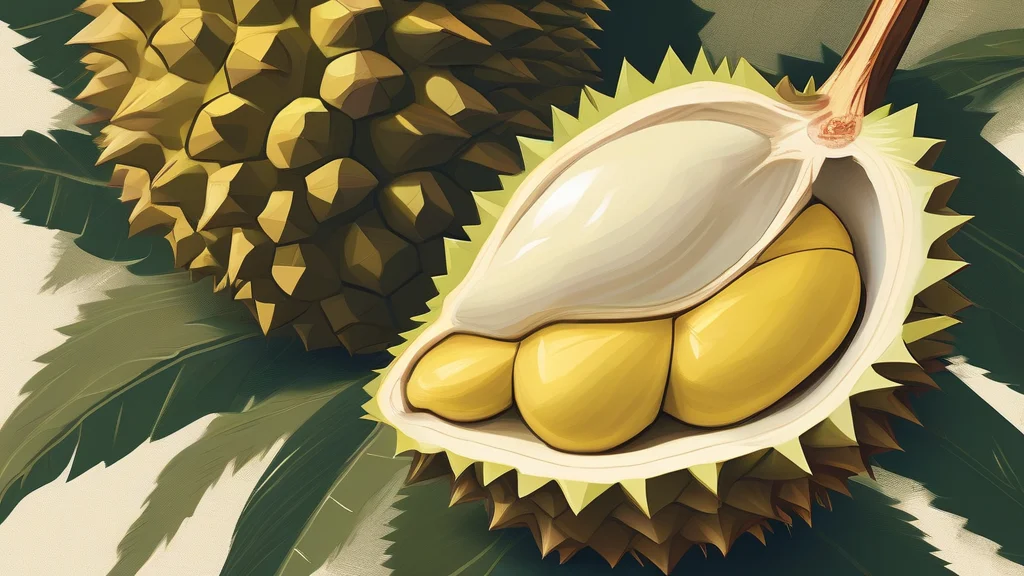
The durian is a large tropical fruit produced by a tree of the same name native to Southeast Asia, most famously cultivated in Malaysia, Indonesia, and Thailand. Encased in a formidable husk covered in sharp thorns, the fruit contains pods of pale, custard-like flesh whose flavor is variously described as sweet, nutty, and rich. What makes the durian truly distinctive is its aroma — an intensely pungent odor so strong that it is banned on many forms of public transport and in hotels across Asia, even as enthusiasts celebrate it as the 'king of fruits'. The English word entered the language in the early seventeenth century, borrowed from Malay dūriān, which derives from Malay duri meaning thorn. Today the term appears in travel writing, food journalism, and everyday speech whenever this famously divisive delicacy is discussed, making it an essential word for describing Southeast Asian cuisine and culture.
nounA large, spiny tropical fruit of a tree native to Southeast Asia, famous for its extremely strong and divisive odor; also the tree itself that bears this fruit.
- The large spiny edible fruit of the tree Durio zibethinus, prized in Southeast Asia for its rich custard-like flesh despite its powerful smell.
- The tall tropical tree of the genus Durio (Durio zibethinus) that bears this fruit.
"The hotel lobby had a strict sign forbidding guests to bring durian into their rooms."
"She braved the market stalls to taste fresh durian for the first time."
"The durian trees behind the village had been planted by his grandfather decades ago."
Used when referring to multiple whole fruits or trees; the flesh eaten as food is treated as uncountable.
"We bought two durians at the roadside stall near Kuala Lumpur."
Banned from hotels, subways, and airplanes across Southeast Asia, the durian is the only fruit with its own public no-smell signs.
Reviewed by Deb Chak, Editor. AI-assisted content curated by RJS Tech Solutions LLP.
Etymology of durian
The word durian was borrowed into English in the early seventeenth century from Malay dūriān, itself derived from Malay duri, meaning thorn or spine — a reference to the fruit's formidable armored husk. It shares this root with other words ultimately connected to the Latin durus, meaning hard, such as durable, endure, and obdurate, though these came into English through separate routes. The spelling has been stable in English since the earliest European accounts of the fruit.
How durian is actually used
The word is neutral in register, but the fruit itself carries strongly polarized connotations: devotees describe it as deliciously creamy while detractors compare its smell to rotten onions. It is often described as 'the king of fruits' in Southeast Asia.
Easily confused with durian
Jackfruit is a similarly large spiky tropical fruit but has a mild sweet flavor and far less pungent smell, whereas durian is notorious for its overpowering odor.