
What does dutchmen mean?
Dutchmen is the standard plural of Dutchman and refers to men who are natives or inhabitants of the Netherlands, or to men of Dutch ancestry. The term appears most often in historical, cultural, and descriptive writing — for example, accounts of Dutch colonists in seventeenth-century New Amsterdam, or discussions of painters, sailors, and merchants of the Dutch Golden Age. Like all demonyms derived from proper adjectives, it is always capitalized. Because it denotes males specifically, writers referring to mixed groups typically prefer "the Dutch" as a collective noun, while "Dutchwoman/Dutchwomen" covers the feminine forms. A notable wrinkle in American usage is that "Dutch" historically overlapped with "Deutsch" (German), so some older texts apply the word loosely to German immigrants — the source of the famous "Pennsylvania Dutch," who are actually largely of German descent. Today, however, Dutchmen unambiguously evokes the Netherlands and its people.
nounDutchmen is the plural of Dutchman, meaning men who are natives or inhabitants of the Netherlands, or men of Dutch descent.
- Men who are natives or inhabitants of the Netherlands; men of Dutch nationality or descent.
- In historical North American contexts: Dutch colonists or immigrants and their male descendants.
"The early Dutchmen who settled along the Hudson River left a lasting mark on New York place names."
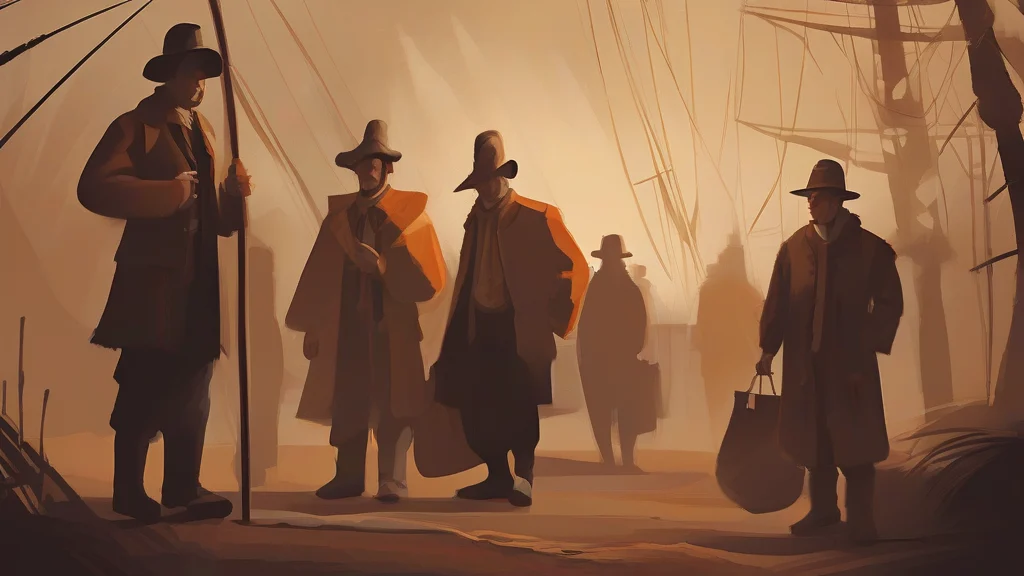
"The tall Dutchmen in the painting wore wide-brimmed hats typical of seventeenth-century Holland."
"Early Dutchmen built much of the original infrastructure of colonial New Amsterdam."
This is already the irregular-style plural of "Dutchman" (man → men); there is no further plural form.
"The Dutchmen aboard the merchant fleet sailed for the East Indies each spring."
"Dutch" and "Deutsch" come from the same ancient root meaning "of the people" — which is why Pennsylvania Germans ended up called the Pennsylvania Dutch!
Reviewed by Deb Chak, Editor. AI-assisted content curated by RJS Tech Solutions LLP.
Etymology of dutchmen
Dutchman combines "Dutch" with "man," with the plural formed regularly as Dutchmen. "Dutch" descends from Middle English "duche," borrowed from Middle Dutch "dutsch," ultimately from Proto-Germanic *þiudiskaz, meaning "of the people." The same root produced German "Deutsch," which is why English once used "Dutch" broadly for continental Germanic peoples before it narrowed to mean specifically Netherlandish by the seventeenth century. Cognate forms appear across the Germanic languages, all tracing back to that ancient word for "the people's language."
Related word forms
How dutchmen is actually used
Always capitalized, as it derives from the proper adjective "Dutch." It refers specifically to men; use "Dutchwomen" or the collective "the Dutch" for mixed groups. In some historical American contexts it can loosely include German immigrants due to the old shared origin of "Dutch" and "Deutsch," so context matters.
Easily confused with dutchmen
"Dutchmen" refers to people from the Netherlands, while "Germans" (Deutsche) are from Germany — the two words share an etymological root but denote different nationalities today.