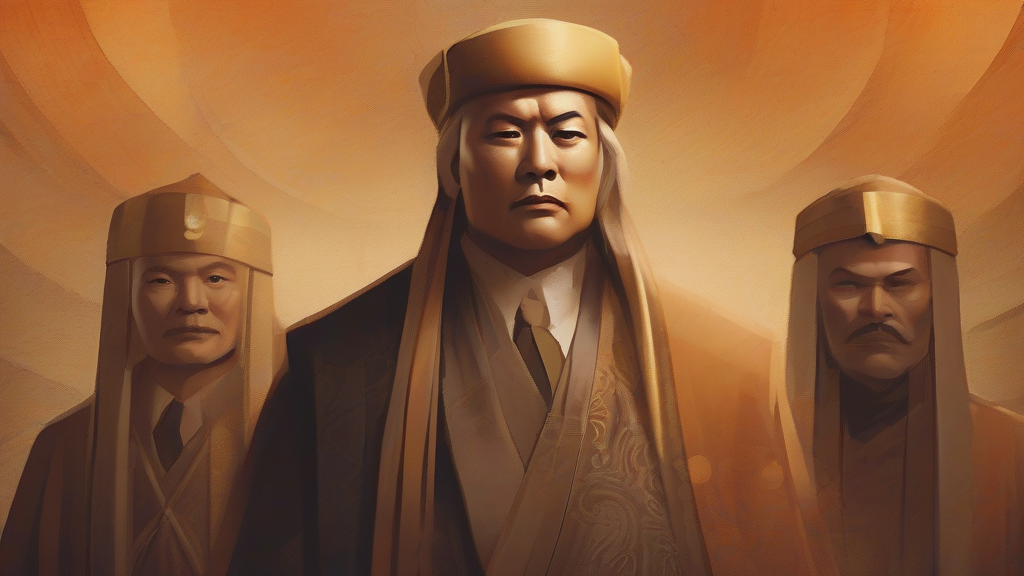
What does dynasty mean?
A dynasty is a line of rulers drawn from the same family, in which sovereignty or leadership is passed down through inheritance across successive generations. The term is most closely associated with imperial China — where great dynasties such as the Tang, Ming, and Qing shaped centuries of history — but it applies equally to royal houses elsewhere, from the Tudors of England to the Bourbons of France. Beyond politics, 'dynasty' has broadened to describe any powerful family that sustains its influence over time, whether a business empire, a media house, or a political clan. The word often connotes continuity, tradition, and accumulated prestige, though in modern usage it can carry a hint of criticism, suggesting unearned advantage passed along family lines. Derived forms include the adjective 'dynastic' and the noun 'dynast,' meaning an individual hereditary ruler.
nounA line of hereditary rulers of a country or empire, typically successive members of the same family; more broadly, any powerful family or group that maintains its position and influence over successive generations.
- A sequence of rulers from the same family, especially in a monarchy or empire, whose succession passes by inheritance.
- By extension, a powerful family or business that maintains dominance and influence across multiple generations (e.g., a political or media dynasty).
"The Tudor dynasty transformed England during its century of rule."
"The Qing dynasty governed China for more than two hundred and sixty years before falling in 1912."
"After three generations running the newspaper, the family had become a true publishing dynasty."
The plural follows the regular English pattern for nouns ending in consonant + y, changing y to ies.
"Ancient Egypt was governed by a series of dynasties spanning nearly three thousand years."
China's Ming dynasty built the Forbidden City and ruled for nearly 300 years — yet the word 'dynasty' itself comes from a Greek verb meaning simply 'to be able.'
Reviewed by Deb Chak, Editor. AI-assisted content curated by RJS Tech Solutions LLP.
Etymology of dynasty
Dynasty derives from the Greek dynasteia, meaning 'lordship' or 'power to rule,' which itself comes from dynastes ('lord, ruler') and ultimately from the Greek verb dynasthai, 'to be able' — the same root that gives us dynamic, dynamite, and dynamo. The word entered English in the early 15th century via medieval Latin dynastia and French dynastie. Its application to Chinese ruling houses became especially prominent in English through historical writing on Asia.
Related word forms
How dynasty is actually used
The word carries a neutral-to-reverent historical tone when applied to royal houses, but can take on a slightly critical or ironic edge in modern political or business contexts, implying inherited privilege rather than merit. It is standard in both formal and journalistic register.
Easily confused with dynasty
A dynast is an individual ruler who inherits power within a dynasty, whereas a dynasty is the entire family line or sequence of rulers.
A regime refers to a government or system of rule in power at a given time, while a dynasty specifically denotes rule passed down through one family.