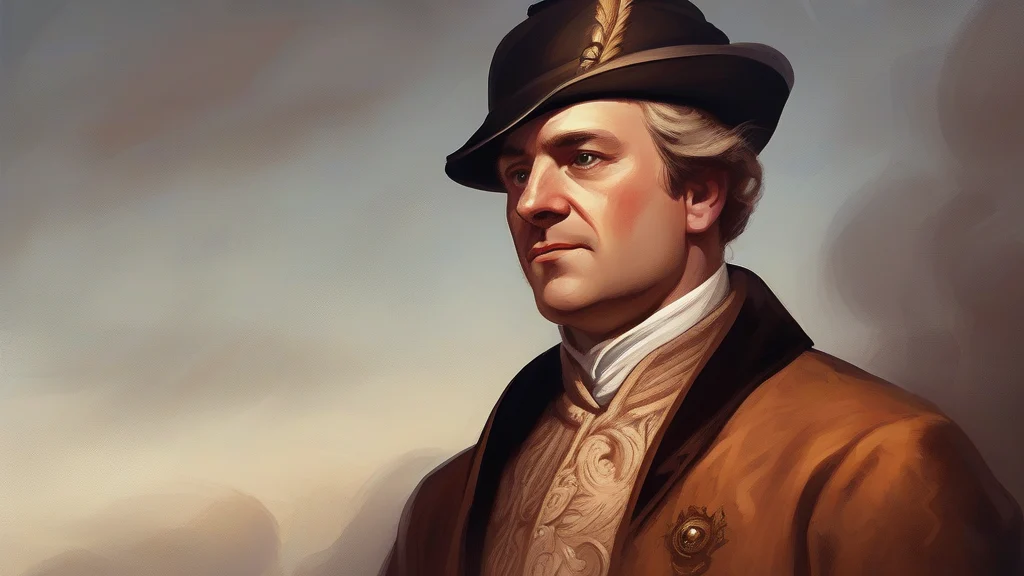
What does earl mean?
An earl is a British nobleman holding one of the five ranks of the peerage — specifically the third-highest, above viscounts and barons but below marquesses and dukes. The title traces back to Anglo-Saxon England, where an earl was the king's chief representative in a region, commanding armies and administering justice much as a modern viceroy would. Over the centuries, as the feudal system gave way to a ceremonial aristocracy, the role became largely honorific: today earls sit in the House of Lords by inheritance or life appointment and lend their names to places, institutions, and even foods — most famously Earl Grey tea, named after a nineteenth-century prime minister. The female equivalent is a countess. Outside Britain, comparable continental titles are typically translated as 'count', making 'earl' a distinctly English word for a distinctly English institution.
nounA British nobleman ranking above a viscount and below a marquess, historically the highest rank below the king in Anglo-Saxon England.
- A member of the British nobility holding the third-highest rank of the peerage, above a viscount and below a marquess.
- (historical) In Anglo-Saxon England, a governor or military commander of a shire, equivalent to a Scandinavian jarl.
"The earl opened his estate to the public each summer."
"She was granted the courtesy title of countess upon marrying the earl of Ashford."
"In Anglo-Saxon England, each shire was governed by an ealdorman who might later be elevated to earl."
Regular plural; used when referring to multiple holders of the title collectively.
"Several earls attended the coronation ceremony at Westminster Abbey."
An earl once outranked every other subject except the king himself — and today the title lives on everywhere from British honours lists to a bergamot-scented cup of Earl Grey.
Reviewed by Deb Chak, Editor. AI-assisted content curated by RJS Tech Solutions LLP.
Etymology of earl
The word 'earl' derives from Old English 'eorl', meaning nobleman or warrior, from the Proto-Germanic root '*erlaz'. It is directly cognate with Old Norse 'jarl', which denoted the same rank of regional ruler in Scandinavia. After the Norman Conquest of 1066, the term survived alongside the Norman-introduced system of dukes, marquesses, and counts, settling into its current position as the third rank of the British peerage.
Related word forms
How earl is actually used
The feminine form is 'countess', used both for an earl's wife and for a woman holding the title in her own right. In formal address, an earl is styled 'Lord [Title]' — e.g., the Earl of Sandwich is addressed as Lord Sandwich. The word is chiefly British; other countries' equivalents are usually rendered as 'count'.
Easily confused with earl
A pearl is a gemstone formed within a mollusc's shell, while an earl is a British peer of noble rank.