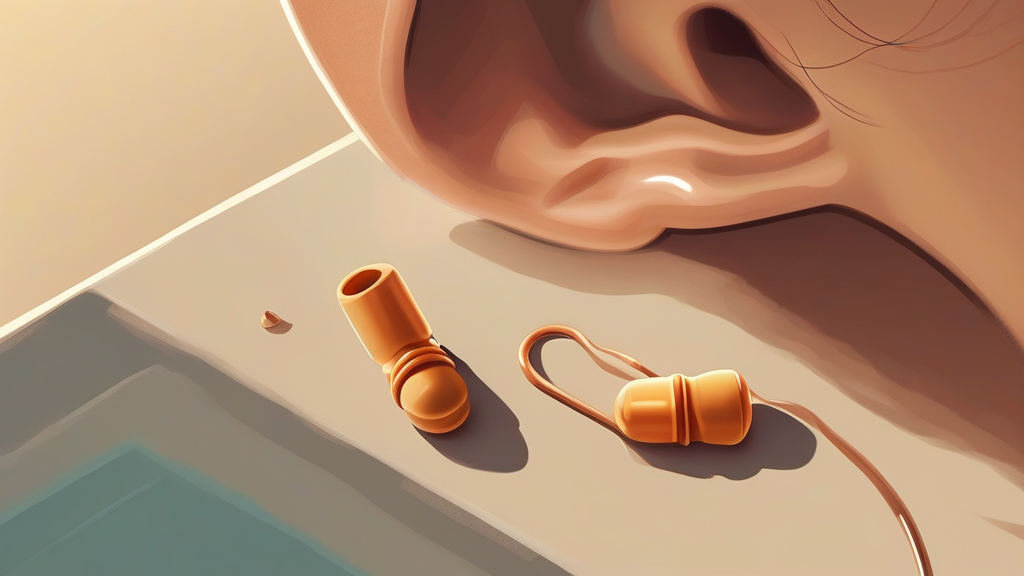
What does earplug mean?
An earplug is a small device made of soft material — most commonly compressible foam, but also wax, silicone, or moulded plastic — that is inserted into the opening of the ear to block sound or keep out water. Earplugs serve several practical purposes: protecting hearing in noisy environments such as factories, concerts, and shooting ranges; aiding sleep by muffling disruptive sounds; and preventing water from entering the ear canal during swimming. They are usually sold and used in pairs, one for each ear, which is why the plural form dominates everyday usage. The word is entirely neutral in tone, appearing equally in casual conversation ('I can't sleep without earplugs') and in formal occupational-health guidance, where regulations often mandate hearing protection in high-noise workplaces. Simple, inexpensive, and widely available, the earplug is among the most familiar items of personal protective equipment, and its name transparently combines 'ear' with 'plug' — a fitting description of exactly what it does.
nounA small plug of soft material inserted into the ear canal to keep out water, reduce noise, or protect hearing.
- A small plug, typically of soft material such as foam, wax, or silicone, inserted into the ear canal to block noise or prevent water from entering.
"She wore foam earplugs at the concert to protect her hearing from the amplified music."
"The factory requires all workers on the floor to wear earplugs at all times."
"He tucked a pair of silicone earplugs into his swim bag before heading to the pool."
The standard plural adds -s. Because earplugs come in pairs, the plural is the default form in most real-world usage; the singular refers to a single plug for one ear.
"Remember to bring your earplugs to the festival — the campsites are noisy all night."
Musicians who play loud venues nightly often use custom-moulded earplugs — because once noise-induced hearing loss sets in, no device can bring it back.
Reviewed by Deb Chak, Editor. AI-assisted content curated by RJS Tech Solutions LLP.
Etymology of earplug
The word earplug is a straightforward English compound of 'ear', from Old English ēare, and 'plug', a noun borrowed from Dutch in the early seventeenth century originally meaning a piece of wood used to stop a hole. The compound itself is comparatively modern, arising once plugs of soft material began to be marketed specifically for insertion into the ears, particularly in the late nineteenth and twentieth centuries. It belongs to a large family of English compounds built on 'ear', including eardrum, earlobe, and earshot, and its second element connects it to other 'plug'-based terms for devices that seal an opening.
Related word forms
How earplug is actually used
Almost always used in the plural when referring to the pair worn in both ears; the singular is used for a single item. The word is neutral in register and common in everyday speech as well as technical contexts concerning occupational health and hearing protection.
Easily confused with earplug
An earbud is a small speaker placed in the outer ear to deliver audio, whereas an earplug is inserted to block sound or water.
An earpiece is part of a device (such as headphones or a hearing aid) that fits over or into the ear, while an earplug is a standalone item used to block noise or water.