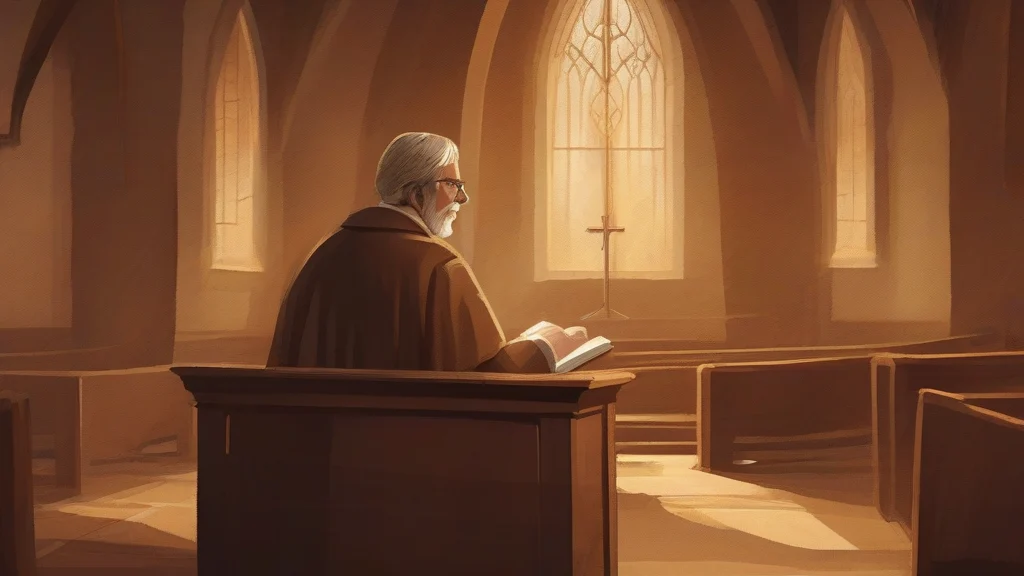
What does ecclesiologist mean?
An ecclesiologist is a specialist in ecclesiology, the study of the Christian Church. Depending on context, the term refers either to a theologian concerned with the Church's nature, governance, worship, and sacraments, or to a scholar of church buildings — their architecture, furnishing, and correct historical restoration. The word carries a distinctly learned, formal register and appears most often in academic writing on theology, liturgy, and architectural history rather than in everyday conversation. Its most famous bearers were the Victorian ecclesiologists of the Cambridge Camden Society (later the Ecclesiological Society), who in the mid-nineteenth century campaigned for rigorously Gothic church design and reshaped Anglican attitudes toward worship spaces. A related but distinct term is ecologist, which concerns ecosystems rather than churches. For readers interested in how religious communities understand themselves, or how sacred architecture is preserved, ecclesiologist names precisely that kind of expert.
nounA person who studies ecclesiology, the branch of theology concerned with the nature, structure, and life of the Christian Church; in architectural contexts, a scholar of church buildings and their design.
- A theologian who specializes in the study of the Church — its doctrine, polity, and sacramental life.
- A scholar or expert on church architecture, especially one concerned with historically correct design and restoration.
"The cathedral's restoration was guided at every stage by a distinguished ecclesiologist."
"As an ecclesiologist, she argued that the parish's liturgy should reflect the earliest traditions of the apostolic church."
"The Victorian ecclesiologists insisted that any Gothic revival church follow strict medieval precedents in plan and ornament."
Standard plural; used for multiple scholars or practitioners in the field.
"Nineteenth-century ecclesiologists left a lasting mark on English church architecture."
In Victorian England, 'ecclesiologist' was practically a job title — members of the Cambridge Camden Society called themselves exactly that while transforming how Britain restored its medieval churches.
Reviewed by Deb Chak, Editor. AI-assisted content curated by RJS Tech Solutions LLP.
Etymology of ecclesiologist
Ecclesiologist derives from ecclesiology, formed from Greek ekklēsia, meaning 'assembly' or 'church,' combined with -logy ('study of') and the agent suffix -ist. The Greek root ekklēsia comes from ekkalein, 'to call out,' and passed through Latin ecclesia before entering English. Cognates sharing this root include ecclesiastical, ecclesiastic, and the borrowed form ecclesia itself. The term gained particular prominence in mid-nineteenth-century Britain through the publications of the Ecclesiological Society.
How ecclesiologist is actually used
A formal, scholarly term used mainly in academic theology, church history, and architectural history. In ordinary speech it is rare; speakers more often say 'church historian' or 'expert on church architecture.' The architectural sense is especially associated with nineteenth-century British writers such as the Cambridge Camden Society, whose journal The Ecclesiologist gave the word currency.
Easily confused with ecclesiologist
An ecologist studies organisms and their environments, while an ecclesiologist studies the Christian Church, its theology, or its buildings.