
What does eiderdown mean?
Eiderdown refers to the exceptionally soft, light under-feathers of the eider duck, a sea duck of northern coasts whose down provides remarkable insulation against cold water. Because of these qualities, eiderdown has long been prized as a filling for quilts, pillows, and outerwear, and genuine eiderdown remains one of the most luxurious and expensive bedding materials in the world. By extension, particularly in British English, the word also denotes a quilt or duvet stuffed with eiderdown or a similar soft material — the sort of warm bedcover one pulls up on a winter night. The word thus carries strong connotations of comfort, coziness, and indulgence. It entered English in the seventeenth century, combining 'eider,' the duck's name from Old Norse, with 'down,' meaning fine feathers. Today it appears both literally, in descriptions of premium textiles, and figuratively, evoking warmth and snug domestic ease.
The soft, warm under-feathers of the eider duck, valued as insulation in quilts, pillows, and garments.
"Genuine eiderdown commands a high price because each nest yields only a small amount of usable down."
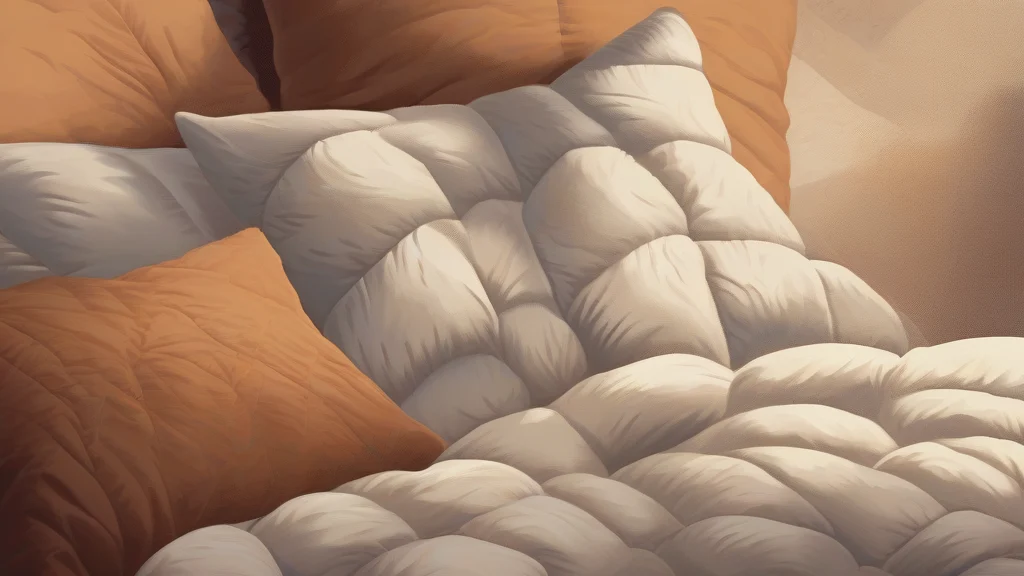
A quilt or duvet filled with eiderdown or a similar soft material; a warm bedcovering (especially British).
"On winter nights she slept beneath her grandmother's old eiderdown."
This sense is more common in British English; American speakers typically say 'comforter' or 'duvet' for the finished bedcovering.
The plural applies mainly to the sense of a finished quilt or bedcovering; the material sense ('the feathers') is typically uncountable.
"The linen closet held spare blankets and two eiderdowns for guests."
Real eiderdown is so prized that it's still hand-harvested from the nests of wild eider ducks in Iceland — and the ducks are allowed to keep nesting there, because a comfortable eider always comes back.
Reviewed by Deb Chak, Editor. AI-assisted content curated by RJS Tech Solutions LLP.
Etymology of eiderdown
Eiderdown combines 'eider,' the name of the northern sea duck, borrowed from Old Norse æðr, with 'down,' meaning fine under-feathers, which also derives from Old Norse dún. The compound arose in English in the early seventeenth century as trade in the duck's prized plumage developed across northern Europe. The word 'down' in this sense has cognates in other Germanic languages, such as Danish and Norwegian dun.
How eiderdown is actually used
In American English, 'eiderdown' most often refers to the feathers themselves or to premium bedding filled with them, while British English commonly uses 'eiderdown' to mean the finished bedcovering, roughly equivalent to the American 'comforter.' The word carries connotations of luxury, warmth, and old-fashioned comfort.
Easily confused with eiderdown
A duvet is any removable quilt-like bed covering filled with down, feathers, or synthetic fiber, while an eiderdown specifically refers to the under-plumage of the eider duck or a quilt filled with it.