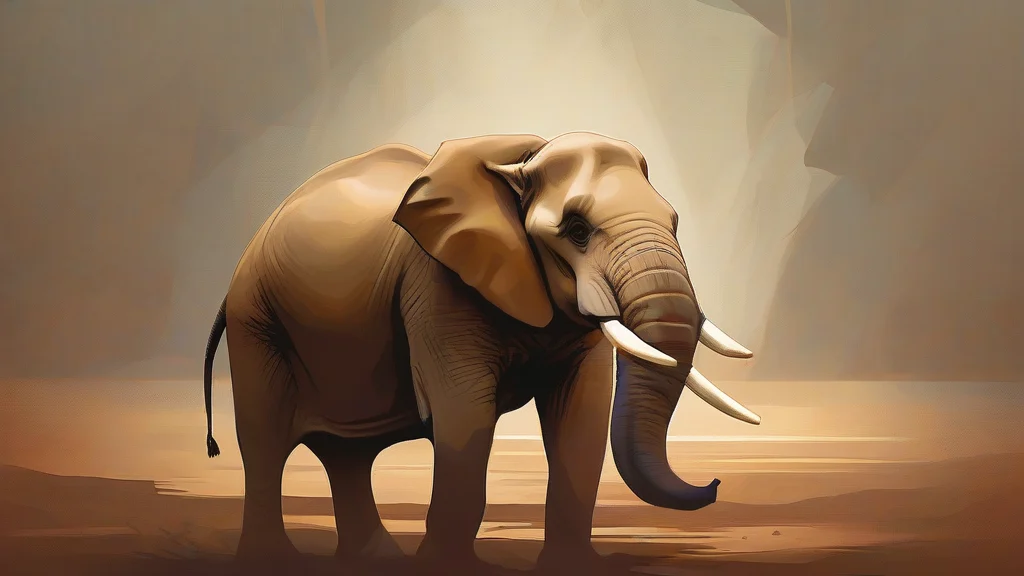
What does elephantine mean?
Elephantine is a formal adjective describing something of enormous size, weight, or bulk, especially when that mass makes movement slow, heavy, or clumsy. It derives directly from the elephant, an animal whose name has long served as shorthand for immensity. Calling a bureaucracy, a building, or a person's footsteps elephantine emphasizes both scale and a certain ponderous quality, often with a wry or gently mocking tone. Yet the word can be turned admiringly — dancers and athletes are sometimes praised for achieving 'elephantine grace,' suggesting surprising delicacy despite great bulk. A second, narrower sense relates literally to elephants or to ivory, appearing mostly in scholarly writing about carved tusks and ancient artifacts. Rooted in Greek and Latin, elephantine gives writers an elegant, slightly elevated way to convey bigness with character.
Enormous in size or bulk, and typically slow or clumsy in movement; characteristic of or resembling an elephant.
"The elephantine sofa barely fit through the doorway."
Frequently figurative and slightly humorous when describing people or institutions.
Made of or relating to ivory; belonging to or concerning elephants.
"The exhibit featured elephantine carvings recovered from an ancient shipwreck."
Chiefly used in art history, archaeology, and zoological writing.
When ballet dancers move with unexpected lightness, critics say they defy their 'elephantine' bodies — a compliment hiding inside an insult about elephants, animals that actually walk almost silently on padded feet.
Reviewed by Deb Chak, Editor. AI-assisted content curated by RJS Tech Solutions LLP.
Etymology of elephantine
Elephantine comes from Latin elephantinus, meaning 'of ivory' or 'of elephants,' which itself derives from Greek elephantinos, formed on elephas ('elephant' or 'ivory'). The word entered English in the early seventeenth century, initially used of ivory objects before extending to anything of elephant-like hugeness. Its closest relatives are simply 'elephant' and the medical term 'elephantiasis,' both built on the same Greek root.
How elephantine is actually used
Formal to literary in register; rarely used in casual conversation. When applied to people or movements it carries a mildly humorous or critical connotation of clumsiness, though phrases like 'elephantine grace' can soften or invert this. The ivory sense is chiefly found in art-history and archaeological contexts.
Easily confused with elephantine
Elephantine is an adjective describing huge or clumsy size, while elephantiasis is a medical condition causing severe swelling of body parts.