What does elytra mean?
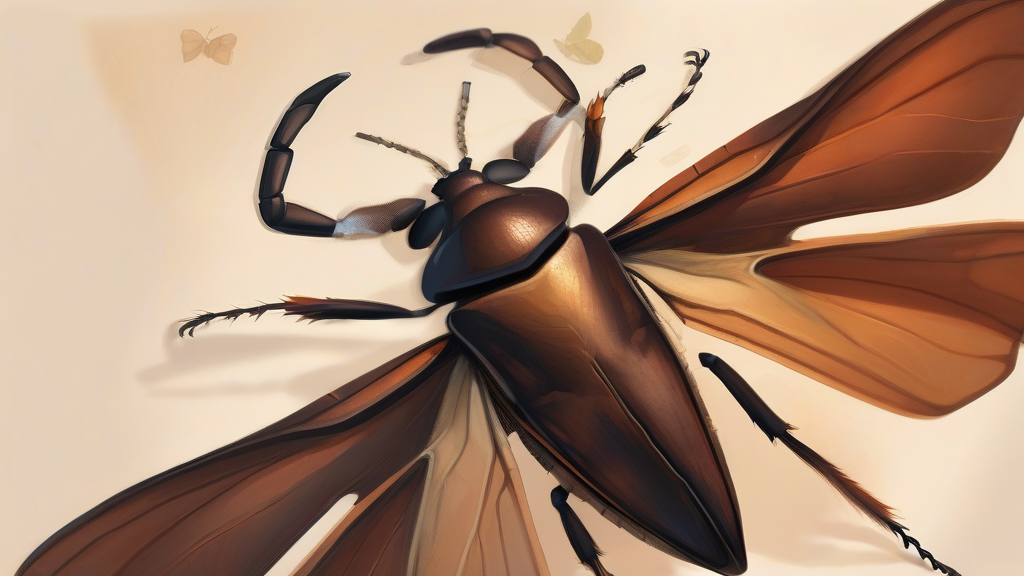
Elytra is the plural of elytron and refers to the modified, hardened forewings found in beetles and certain other insects. Unlike ordinary wings, elytra do not generate lift; instead they form a tough, shell-like casing that shields the fragile hindwings and soft abdomen beneath. When a beetle flies, it raises its elytra to let the membranous hindwings unfold and beat freely. The term belongs chiefly to scientific and naturalist writing — field guides, entomology papers, and nature journalism — where it appears in phrases such as "hardened elytra" or "fused elytra." The word derives from the Greek ēlytron, meaning sheath, a fitting image for these protective covers. Because beetles constitute one of the largest orders of animals on Earth, elytra describe a structure found across an enormous range of species, varying from iridescent and jewel-like to dull and heavily sculptured. For readers of nature writing, recognising the word unlocks precise descriptions of beetle anatomy.
nounThe plural of elytron: the thickened, hardened forewings of beetles and some other insects that form protective cases over the delicate hindwings and abdomen.
- The pair of hardened forewings that protect a beetle's hindwings and abdomen.
"The beetle's glossy elytra snapped shut over its wings as it settled on the leaf."
"Fireflies raise their elytra in flight, revealing the light-producing abdomen beneath."
"In many ground beetles the elytra are fused along the midline, rendering them flightless."
Elytra is itself the plural of the singular elytron. The word is rarely used in the singular outside specialist literature.
"Each beetle bears a pair of elytra that meet in a straight line down its back."
When a beetle takes flight, it lifts its elytra first — those armoured wing cases are so tough they've inspired designs in engineering and even body armour research.
Reviewed by Deb Chak, Editor. AI-assisted content curated by RJS Tech Solutions LLP.
Etymology of elytra
Elytra comes from the Greek noun ēlytron, meaning sheath or covering, adopted into Latin before entering English scientific vocabulary around the early nineteenth century as entomology became systematised. The singular form is elytron, with elytra serving as its standard plural in both British and American usage. The Greek root conveys the idea of an enveloping case, which matches the anatomical role of these structures precisely.
Related word forms
How elytra is actually used
"Elytra" is almost always encountered in entomological or scientific contexts; the singular "elytron" is rarer and mainly used by specialists. It is a technical term rather than an everyday word.