What does elytron mean?
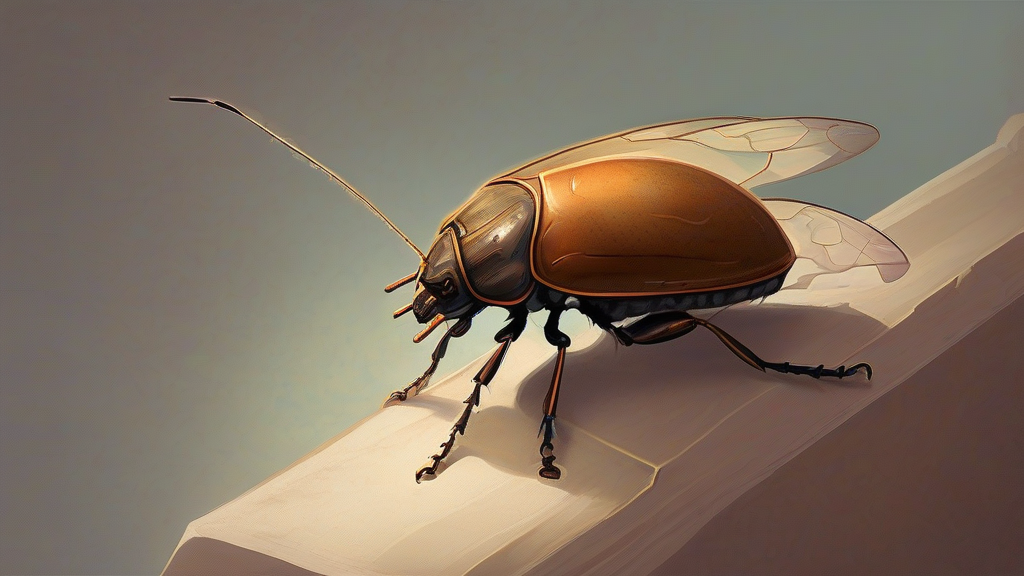
An elytron is one half of the pair of hardened forewings that give beetles their distinctive armoured appearance. Unlike the delicate flying wings of most insects, the elytra are thickened, often leathery or shell-like structures that fold over the membranous hind wings, protecting them and the soft abdomen beneath. When a beetle takes flight, it lifts the elytra open and lets the hidden hind wings do the work of propulsion. The term is chiefly used in entomology and technical descriptions of insects, and it takes the classical plural 'elytra'. The word derives from the Greek 'elytron', meaning 'sheath', an apt image for a casing that encloses something fragile. Beyond beetles, the same term is applied to the modified forewings of certain other insect groups. For anyone reading about insects with any depth, 'elytron' is an essential piece of vocabulary.
nounOne of a pair of hardened forewings of beetles and some other insects, which form protective sheath-like covers over the membranous hind wings when the insect is not flying.
- The thickened, leathery or chitinous forewing of a beetle or similar insect, forming a protective cover over the hind wings and abdomen.
"The beetle's glossy elytron reflected the sunlight as it crawled along the branch."
"Each elytron meets its partner in a neat line down the beetle's back, sealing out moisture and predators."
"In ground beetles, the elytra are often fused together, rendering the insect flightless."
The plural follows the Greek declension ('elytra'), which is standard in entomological literature; the anglicized 'elytrons' appears only rarely.
"The ladybird's red elytra are dotted with black spots."
A beetle's first pair of wings isn't for flying at all — it's armour, and each plate has its own name: the elytron.
Reviewed by Deb Chak, Editor. AI-assisted content curated by RJS Tech Solutions LLP.
Etymology of elytron
The word 'elytron' comes directly from the Greek 'elytron', meaning 'sheath' or 'wrapper', referring to the way these forewings encase the insect's hind wings like a scabbard holds a blade. It was adopted into scientific Latin and entered English use in the context of entomology, where it remains the standard anatomical term. The adjective form 'elytroid' shares the same root.
Related word forms
How elytron is actually used
A technical term used almost exclusively in entomology and zoology; rare in everyday speech. The standard plural is 'elytra', following the Greek pattern, though 'elytrons' occasionally appears informally.
Easily confused with elytron
'Elytron' is the noun naming a beetle's hardened forewing, while 'elytroid' is an adjective describing something shaped like such a wing case.