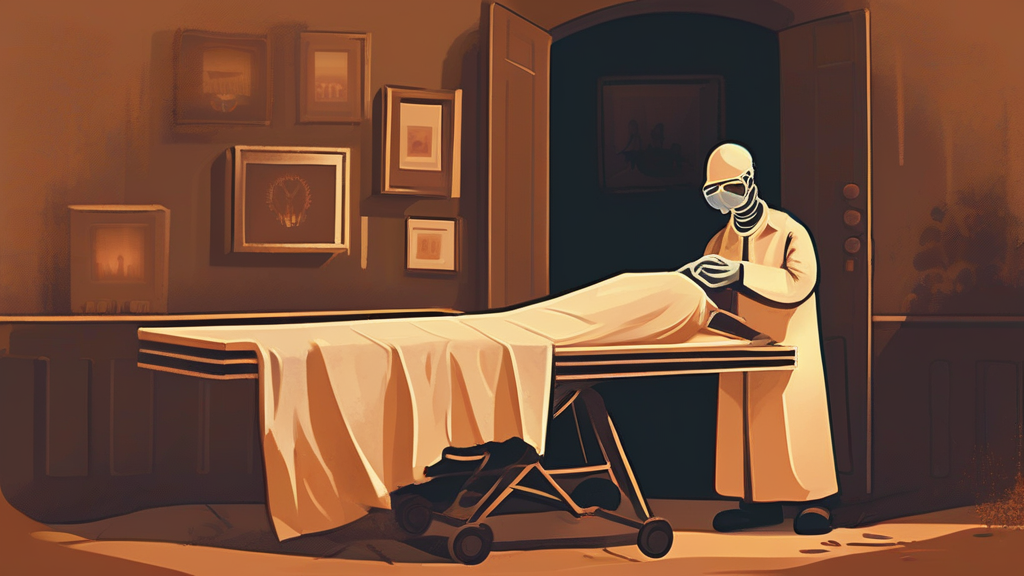
What does embalmer mean?
An embalmer is a trained professional who preserves a dead body by replacing its blood with chemical preservatives, most commonly formaldehyde-based solutions, in order to slow decomposition. Embalming is performed chiefly so that a body can be viewed at a wake or funeral, or so it can be transported over long distances before burial or cremation. In many countries, including the United States and Canada, embalmers are licensed practitioners who often work within funeral homes alongside morticians and funeral directors; in some regions the roles overlap, while in others embalming is less common or legally optional. The profession has ancient roots: Egyptian embalmers developed sophisticated techniques for preserving the dead, giving rise to the practice of mummification. Today the word is neutral in tone but inevitably associated with death, and it denotes a skilled trade requiring anatomical knowledge, sanitation practices, and emotional resilience.
nounA person whose job is to preserve a dead body by treating it with chemicals, typically in preparation for burial or viewing.
- A person who treats and preserves a dead body with chemicals in preparation for burial or viewing.
"The embalmer worked carefully through the night to prepare the body for the funeral."
"The licensed embalmer prepared the deceased for the open-casket viewing."
"In ancient Egypt, embalmers were highly respected craftsmen entrusted with preparing bodies for the afterlife."
Standard regular plural.
"Ancient Egyptian embalmers held a privileged position in society."
The word 'embalm' literally means 'in balm' — from the same fragrant resin, balsam, that ancient Egyptians packed into mummies.
Reviewed by Deb Chak, Editor. AI-assisted content curated by RJS Tech Solutions LLP.
Etymology of embalmer
An 'embalmer' is one who 'embalms', a verb borrowed into English from Old French 'embaumer' in the late medieval period, formed from the prefix 'en-' ('in') plus 'baume', meaning balm or fragrant resin. 'Baume' itself derives from Latin 'balsamum', which traces back through Greek 'balsamon' to Semitic origins. Thus the word literally means to place a body 'in balm', reflecting the ancient use of aromatic resins such as myrrh and frankincense in preserving corpses — a technique perfected by Egyptian embalmers producing mummies.
Related word forms
How embalmer is actually used
The word is neutral and professional in register, used within the funeral industry and in journalism about it. It refers specifically to the technical preservation of bodies, whereas 'mortician', 'funeral director', and 'undertaker' are broader occupational terms that may or may not include embalming among their duties. The occupation carries solemn connotations given its association with death.
Easily confused with embalmer
An embalmer preserves human bodies for funerals, while an entomologist studies insects — they are unrelated professions despite no strong similarity; a more likely confusion is with 'mortician', which is broader and covers arranging funerals as well as preparing bodies.