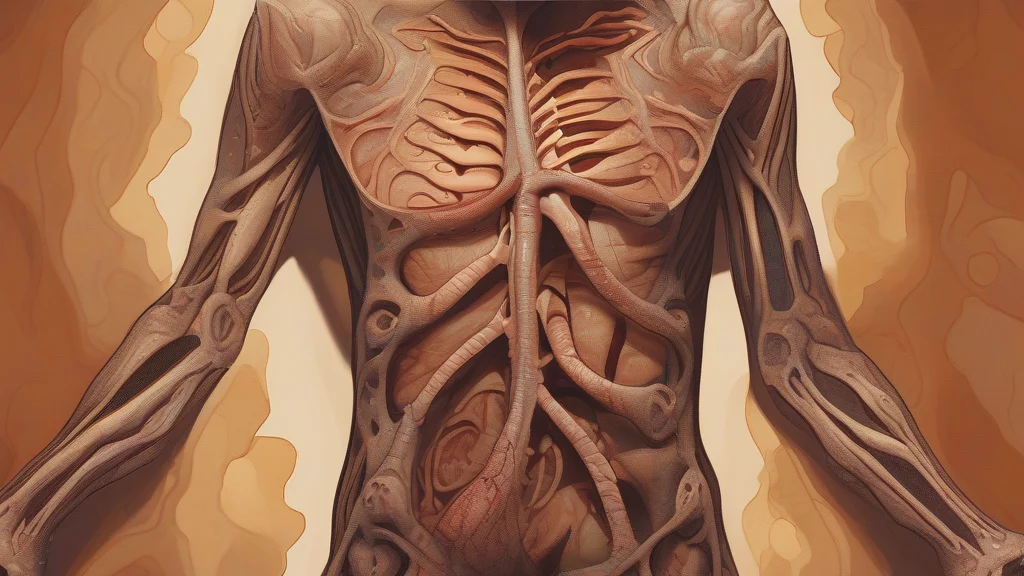
What does emboweled mean?
Emboweled is the past tense and past participle of the verb embowel, which means to remove the intestines or internal organs from a body — whether of an animal during butchery, a corpse during mummification or anatomical study, or, grimly, as a form of historical execution. By extension, it can figuratively describe hollowing out the interior of any object. The word is built from the prefix "em-" (meaning 'to put into' or 'to cause to be') plus "bowel," so its meaning is fairly transparent once parsed. In contemporary usage, emboweled is decidedly archaic and rare; modern English overwhelmingly favors the synonymous "disemboweled." Readers are most likely to encounter emboweled in older literature, historical accounts of medieval punishment such as hanging, drawing, and quartering, or specialized discussions of anatomy and preservation. Its connotations are visceral and somber, making it a word best suited to deliberate, evocative prose rather than everyday conversation.
verbPast tense and past participle of "embowel": to remove the intestines or internal organs of a body; more broadly, to eviscerate or hollow something out.
- To remove the intestines or internal organs of a human or animal body.
- (Figurative or extended) To hollow out or empty the interior of something.
"The anatomist carefully described how the ancient priests had emboweled the body before mummification."
"The medieval practice required that traitors be hanged, drawn, and emboweled before their execution was complete."
"The old tree trunk had been emboweled by decades of rot, leaving only a hollow shell."
Despite sounding like it means 'given courage,' emboweled actually describes one of history's grimmest procedures — removing a body's innards.
Reviewed by Deb Chak, Editor. AI-assisted content curated by RJS Tech Solutions LLP.
Etymology of emboweled
Embowel derives from the Middle French-influenced pattern of "em-" (from Latin in-, via Old French en-) attached to "bowel," which comes through Old French boel from Latin botellus, a diminutive of botulus meaning 'sausage.' The verb arose in Middle English, with the spelling "emboweled" reflecting standard American doubling conventions while British English often prefers "embowelled." A notable cousin sharing the Latin root botulus is "botulism," named for the bacterium historically associated with tainted sausage.
Related word forms
How emboweled is actually used
The word is archaic and rare in modern English, appearing mostly in historical, literary, or medical contexts. The prefix "em-" (a variant of "en-", meaning 'to cause to be in') combined with "bowel" makes its literal sense transparent. Modern writers overwhelmingly prefer "disemboweled," which carries the identical meaning.
Easily confused with emboweled
"Emboldened" means made brave or encouraged to act boldly, while "emboweled" refers to removing the internal organs of a body.