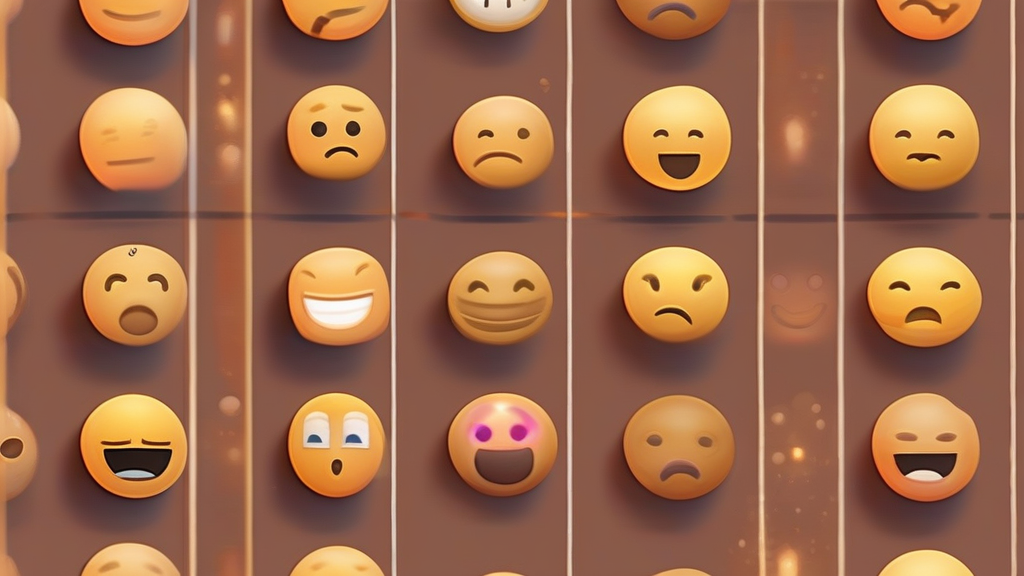
What does emoji mean?
An emoji is a small digital image or pictograph used in electronic communication to convey emotions, objects, ideas, or symbols. Originating in Japan in the late 1990s, emoji quickly spread worldwide through smartphones and messaging platforms, becoming a near-universal feature of informal digital writing. Users insert emoji into texts, emails, and social media posts to add emotional nuance, soften statements, or replace words entirely; a single smiling face can signal friendliness where plain text might seem curt. Because they rely on visual imagery rather than words, emoji can cross language boundaries, though their interpretation can still vary by culture and context. The word itself comes from Japanese e, meaning 'picture', and moji, meaning 'character' — it is unrelated to the English word 'emotion', despite popular assumption. Today, thousands of emoji exist, governed by the Unicode Consortium, which approves new additions each year. Emoji are firmly established in casual registers and increasingly appear even in advertising and journalism, though formal writing generally avoids them.
nounA small digital image or icon used in electronic communication to express an idea, emotion, or object.
- A small digital image or icon used in text messages and online communication to express emotions, ideas, or objects.
"She added a smiling emoji to soften the tone of her message."
"He ended every text with a thumbs-up emoji."
"The marketing team used a fire emoji to highlight the trending product."
Both plural forms are standard. The invariant plural 'emoji' reflects Japanese usage, while 'emojis' follows regular English noun inflection and is favored by many modern style guides.
"The thread was full of celebratory emojis after the announcement."
The word 'emoji' comes from Japanese e (picture) + moji (character) and has no connection to the English word 'emotion' — a coincidence that fooled almost everyone.
Reviewed by Deb Chak, Editor. AI-assisted content curated by RJS Tech Solutions LLP.
Etymology of emoji
The word emoji derives from Japanese 絵文字, combining e ('picture') with moji ('character' or 'letter'). It entered English in the 1990s alongside the rise of mobile phone pictograms developed in Japan. Despite its resemblance to the English word 'emotion', the similarity is purely coincidental, as the Japanese roots have no connection to Latin or English emotional vocabulary. Related Japanese terms sharing the element moji include kanji, hiragana, and katakana, all referring to Japanese writing systems.
How emoji is actually used
Informal register; common in digital communication. The plural is either 'emoji' (unchanged, reflecting Japanese usage) or 'emojis'; both are widely accepted, though style guides increasingly prefer 'emojis'.
Easily confused with emoji
An emoticon is a facial expression made from keyboard characters such as :-) , whereas an emoji is a small pictorial image.