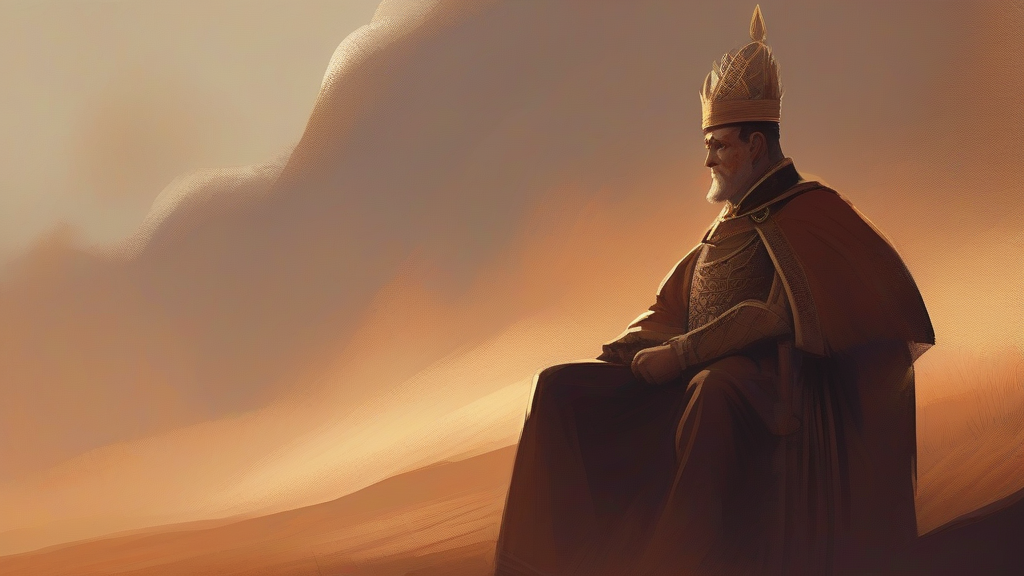
What does emperor mean?
An emperor is a sovereign ruler who governs an empire — a realm typically comprising multiple peoples, kingdoms, or vast territories — and who traditionally ranks above a king in precedence. The title has been borne by rulers of Rome, Byzantium, China, Japan, Persia, and many other states, and it carries connotations of supreme authority, majesty, and imperial grandeur. Beyond its primary political sense, 'emperor' names several animals noted for their size or splendour, including the emperor penguin of Antarctica, the largest living penguin species, and the purple emperor, a celebrated European butterfly. Figuratively, the word appears in expressions such as 'the emperor's new clothes,' denoting unchallenged but hollow authority. Derived from a Latin military honorific, the term remains central to discussions of history, politics, and power, making it essential vocabulary for anyone reading about ancient civilizations or world affairs.
A sovereign ruler of an empire, ranking above a king.
"Napoleon crowned himself Emperor of the French in 1804."
Applied historically to rulers of Rome, Byzantium, China, Japan, and other empires.
A large, brightly coloured butterfly, especially the purple emperor of Europe.
"We glimpsed a purple emperor high in the oak canopy."
Used attributively in the common names of several butterfly species.
The emperor penguin, the largest species of penguin.
"Emperor penguins breed through the Antarctic winter."
Usually found in the compound form 'emperor penguin'.
Regular plural; the feminine form is 'empresses'.
"Several emperors of the Ming dynasty were great patrons of the arts."
The word 'emperor' comes from Latin 'imperator' — originally just a military title meaning 'commander,' awarded to victorious generals before it ever meant royalty.
Reviewed by Deb Chak, Editor. AI-assisted content curated by RJS Tech Solutions LLP.
Etymology of emperor
The word 'emperor' derives from the Latin 'imperator,' which originally meant 'commander' and was an honorific title conferred on victorious Roman generals by their troops. It later became part of the titles assumed by Roman emperors, from which the English word developed through Old French 'empereor.' Cognates include 'empire' and 'imperial,' all stemming from the same Latin root associated with command and authority.
Related word forms
How emperor is actually used
Historically used for rulers such as those of Rome, China, Japan, France, and Austria. The title carries connotations of supreme authority and grandeur, and is often applied metaphorically to domineering figures (as in 'emperor has no clothes'). The feminine form is empress.
Easily confused with emperor
An empire is the territory or domain itself, while the emperor is the person who rules it.