What does encystment mean?
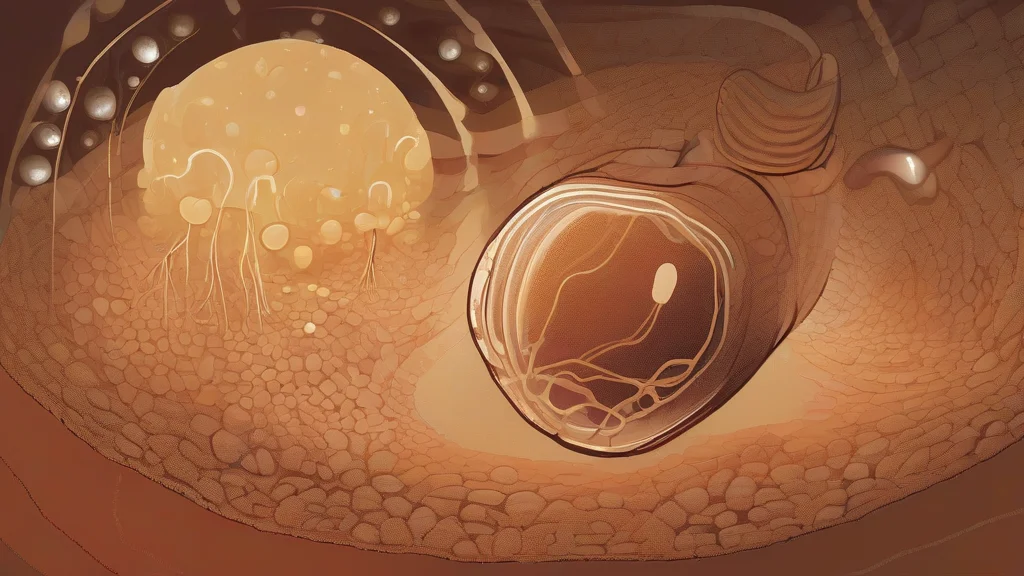
Encystment is the biological process by which an organism—most commonly a parasite, protozoan, or bacterium—seals itself inside a cyst, a tough protective capsule that shields it from hostile conditions such as drying, starvation, or chemical attack. The word functions as a noun and appears almost entirely in scientific writing, particularly parasitology and microbiology. During encystment, the organism's metabolism slows dramatically, allowing it to persist in a dormant state for extended periods before emerging again when conditions improve. The reverse process is called excystment, and confusing the two terms is a common error among students. Though technical in register, the concept it names is remarkable: encystment enables some microorganisms to survive extremes that would kill them outright in their active form, making it a key survival strategy across many branches of life.
nounThe process by which an organism or cell becomes enclosed in a cyst, a protective capsule or sac. In biology, it typically describes parasites or microorganisms forming a resistant resting stage to survive harsh conditions.
- The biological process by which an organism (especially a parasite, protozoan, or bacterium) encloses itself in a protective cyst to withstand unfavorable conditions.
- The condition or state of being enclosed in a cyst.
"During drought, the amoeba survives by encystment, sealing itself inside a tough protective wall until water returns."
"The larvae of many parasitic worms enter a dormant phase through encystment in the host's muscle tissue."
"Encystment allows certain freshwater protozoa to be dispersed by wind without desiccating."
Rarely pluralized, as the word usually denotes a general process rather than countable instances; when counted, the plural follows standard English patterns.
"The researchers documented repeated encystments of the amoebae throughout the culture's lifecycle."
Some microbes have been known to survive decades sealed inside a cyst — encystment is nature's own cryogenic freeze.
Reviewed by Deb Chak, Editor. AI-assisted content curated by RJS Tech Solutions LLP.
Etymology of encystment
Encystment derives from the verb 'encyst', formed from the Greek 'kystis' meaning bladder or pouch, which passed into Latin as 'cystis' and then into English medical vocabulary. The prefix 'en-' indicates entry into or enclosure within something, so the word literally means 'to put into a cyst'. It entered English scientific usage during the nineteenth century as microscopy advanced the study of parasitic life cycles. Related terms sharing the same Greek root include 'cystic' and medical words like 'cystitis'.
Related word forms
How encystment is actually used
A technical term used almost exclusively in biology, medicine, and parasitology; rare in everyday speech. It carries a neutral scientific connotation rather than any emotional charge.
Easily confused with encystment
Encystment is the process of forming and entering a cyst, while excystment is the reverse process of breaking out of one.