What does engine mean?
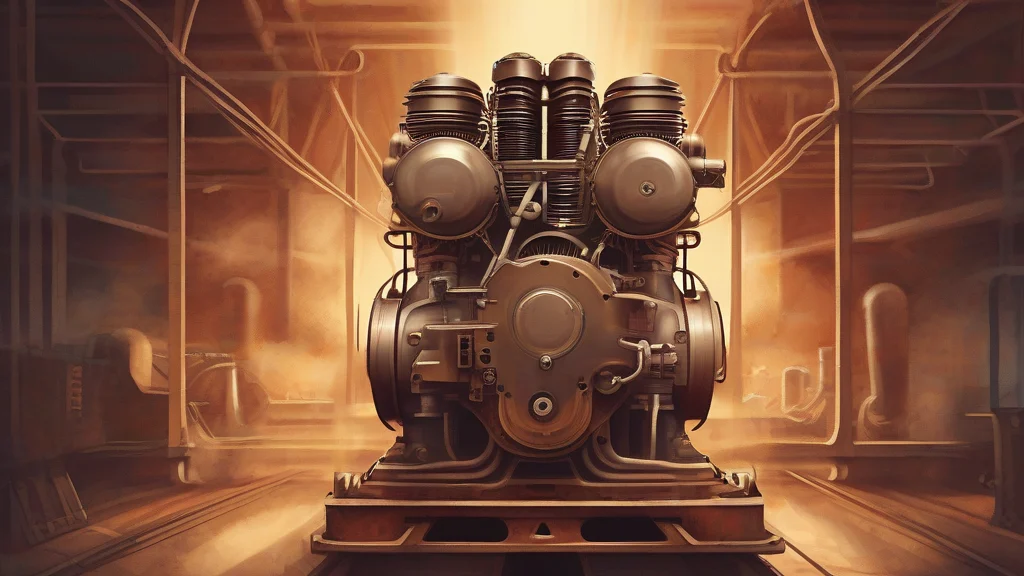
An engine is a machine that transforms energy — most often from burning fuel — into mechanical force, making it one of the foundational inventions of the modern world. From steam engines powering the Industrial Revolution to the internal combustion engines of cars and the jet engines of aircraft, engines have shaped how people travel, work, and build. The word also extends beyond hardware: a search engine sifts through information on the internet, a game engine renders virtual worlds, and writers speak of an 'engine of growth' to describe whatever drives progress. In British English, 'engine' can refer to a railway locomotive itself. Derived from Latin 'ingenium', meaning natural ability or invention, the word shares ancestry with 'ingenious' and 'genius', reflecting its origins in the idea of clever design. Few words so neatly capture humanity's talent for turning raw energy into purposeful motion.
A machine that converts energy, typically from the combustion of fuel or from steam, into mechanical motion or power.
"The diesel engine hauled the freight train across the mountains."
A railway locomotive, especially in British usage.
"The engine pulled eight carriages out of the station."
Chiefly British; American English generally uses 'locomotive' in this sense.
A software system that performs core processing functions, such as a search engine or game engine.
"The search engine indexed millions of pages in seconds."
Figuratively: a thing or force that drives sustained activity or growth.
"Small businesses are the engine of the local economy."
Regular plural; used both for multiple machines and figuratively for multiple driving forces (e.g. 'engines of growth').
"The aircraft's two engines hummed steadily at cruising altitude."
"Engine" and "genius" come from the same Latin root — ingenium — because inventing a clever machine was once considered a form of innate brilliance.
Reviewed by Deb Chak, Editor. AI-assisted content curated by RJS Tech Solutions LLP.
Etymology of engine
Engine derives from Latin 'ingenium', meaning natural capacity, cleverness, or invention, which passed into Old French as 'engin' — originally meaning skill, wit, or a cunning device — before entering Middle English around the 13th–14th century. Its modern sense of a mechanical machine that produces power became dominant by the 18th century with the rise of the steam engine. The same Latin root gives English 'ingenious', 'ingenuity', 'genius', and 'engineer', all preserving the sense of inventive intelligence.
How engine is actually used
In British English, 'engine' commonly refers to railway locomotives ('the engine driver'), whereas American English prefers 'locomotive' in rail contexts. In figurative use, calling something an 'engine' of change or growth implies it is a powerful driving force.
Easily confused with engine
An engine is a machine that produces power, while an engineer is a person who designs, builds, or maintains machines or systems.